7 Best Reasons USB Rechargeable Lights Are Gaining Popularity

Time:2026-11-07 Author:Henry
0%

USB-rechargeable lights are moving from niche gadgets into everyday homes, workshops, and travel bags. A lamp with a USB-C port can charge beside a phone, then move from a desk to a dark cupboard without searching for a wall socket. Small conveniences like that help explain the trend.

Why are USB rechargeable lights gaining popularity in the market? The answer is not just convenience. Buyers also value portability, flexible placement, lower dependence on disposable batteries, and options for emergency lighting. Some models offer dimming, motion sensors, or magnetic bases. Yet the practical details matter: battery life, charging time, brightness, and replacement options vary widely. A low price does not always mean good value.

Dr. Nadarajah Narendran, a lighting researcher at Rensselaer Polytechnic Institute’s Lighting Research Center, provides a useful professional perspective. A fair paraphrase of his research focus is that lighting should be judged by how well it serves real users—not merely by its technology. That distinction matters here. A bright beam is useful, but a light that is awkward to recharge may stay in a drawer.

This guide explores seven reasons USB-rechargeable lights are attracting attention, from easier charging to adaptable design. It also leaves room for a less convenient truth: rechargeable does not automatically mean longer-lasting or more sustainable. The right choice depends on the task, the battery, and how often the light will actually be used.
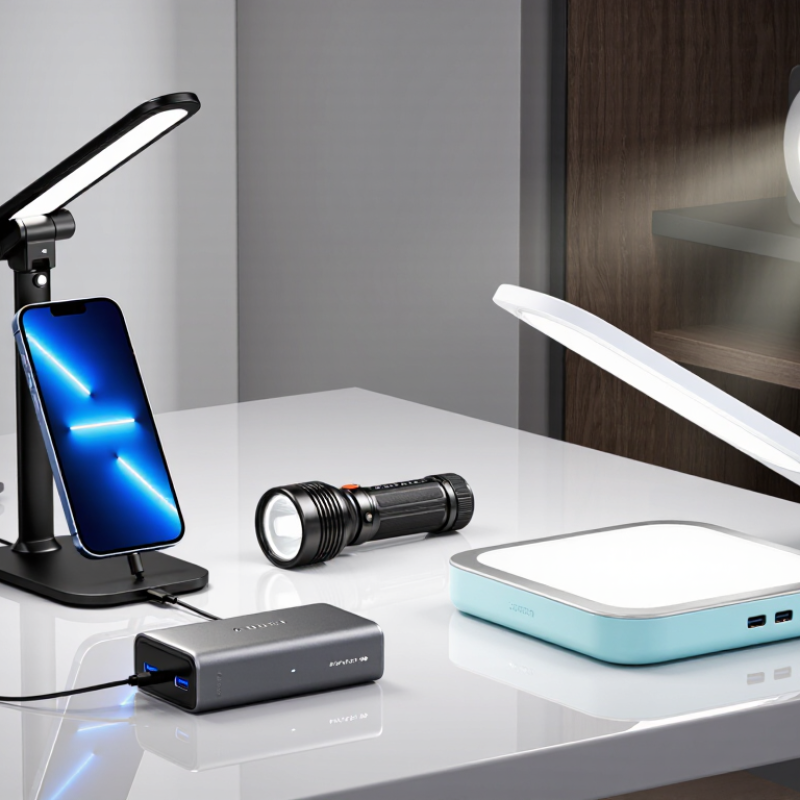
7 Best Reasons USB Rechargeable Lights Are Gaining Popularity

Core Components: How LEDs, Rechargeable Batteries, and USB Ports Work

LEDs create light when electrical current passes through a semiconductor. They waste less energy as heat than older incandescent bulbs. The U.S. Department of Energy reports that LEDs use at least 75% less energy and can last up to 25 times longer than incandescent lighting. That efficiency helps a small rechargeable light run longer between charges. Still, brightness settings matter: a high-output beam can drain a compact battery surprisingly quickly.

Inside the light, a rechargeable battery stores energy for later use. Its capacity, measured in watt-hours or milliamp-hours, affects runtime, while battery chemistry and charging circuitry influence performance and lifespan. A USB port provides the connection to an external power source; internal electronics control how current reaches the battery. USB-IF’s USB Power Delivery 3.1 specification supports power levels up to 240 watts, although most portable lights need far less. The port is only part of the system.

Charging is not instant. Cable quality, the power source, battery capacity, and charging controls all affect the wait. A useful detail: some lights still work while plugged in, but not all do. That can be inconvenient. I have also found that a bright indicator is easy to miss in daylight, so a light may seem ready when its battery is only partly charged. Checking the rated runtime and charging input before use gives a more realistic expectation.

Energy Efficiency: DOE Says LEDs Use at Least 75% Less Energy

Energy efficiency helps explain why USB-rechargeable lights are becoming popular. The U.S. Department of Energy says LEDs use at least 75% less energy than incandescent lighting. That lower demand can help a rechargeable lamp provide useful light without draining its battery as quickly. In a hallway, a small LED light can illuminate the floor without switching on a larger fixture. A handy difference.

USB charging also makes these lights practical around a desk, bedside table, or camping kit. A standard cable can recharge many models from a computer or wall adapter. But efficiency does not mean unlimited runtime. Brightness settings, battery capacity, and how often the light is used all affect how long it lasts. Check the product’s runtime at the brightness you actually need, not just its best-case claim.

There is a trade-off worth remembering. Batteries gradually lose capacity, and charging uses electricity too, so a rechargeable light is not impact-free. I might also forget to recharge it before a power outage. That is a small but real inconvenience. Still, an efficient LED paired with a reusable battery can reduce disposable-battery use and make everyday lighting easier to manage.

Longer Service Life: DOE Estimates LEDs Last Up to 25 Times Longer

USB-rechargeable lights appeal to people who want dependable light without frequent bulb changes. The U.S. Department of Energy estimates that LED bulbs can last up to 25 times longer than incandescent bulbs. That difference can matter in a hallway, workshop, or bedside lamp. Fewer replacements can also mean less waste. On a desk, one compact light may serve through many late-night reading sessions without a bulb change.

The estimate is a comparison, not a promise for every rechargeable light. An LED may keep producing light for years, while its rechargeable battery can lose capacity sooner. After repeated charging, a lamp that once lasted all evening might need plugging in before dinner. That detail is easy to overlook. Check the stated runtime and whether the battery can be replaced. Heat, frequent full-power use, and charging habits can also affect practical service life. No device lasts forever. A USB cable can make topping up simple, but the battery still deserves attention.

Charging Flexibility: USB-IF’s USB Power Delivery 3.1 Supports Up to 240 W

USB-rechargeable lights are easier to power when charging options are flexible. A bedside lamp can use a laptop adapter, while a camping light can connect to a power bank. USB-IF’s 2021 USB Power Delivery 3.1 update introduced Extended Power Range support for up to 240 watts, at 48 volts and 5 amps. That is a substantial ceiling. It gives compatible devices and chargers room to share one charging ecosystem, rather than requiring a dedicated power supply for every light.

But 240 watts is a maximum, not a promise that a small lamp will charge faster. The light, cable, and power source must all support the relevant USB Power Delivery level. Many compact lights need far less power, so a standard adapter may be enough. Check the light’s input rating before choosing a charger. USB-IF’s specification is the authoritative source for the standard’s power limits; actual charging performance depends on the connected equipment. One practical detail matters: a loose cable beside a bed can still interrupt charging. Convenience helps, but compatibility is not automatic.

7 Best Reasons USB Rechargeable Lights Are Gaining Popularity - Charging Flexibility: USB-IF’s USB Power Delivery 3.1 Supports Up to 240 W

Reason Relevant Fact or Data Practical Benefit
1. More flexible charging options Depending on the light’s input specifications, it may be rechargeable from a compatible wall adapter, computer port, power bank, or vehicle USB outlet. Users can choose an available power source instead of relying on a dedicated charging cradle.
2. USB Power Delivery has a high power ceiling USB Power Delivery 3.1 Extended Power Range (EPR) supports up to 240 W. Its EPR voltage levels include 28 V, 36 V, and 48 V, with current up to 5 A. The standard can support a broad range of USB-C power needs. A light only uses the charging mode and power level its own design supports.
3. Easier access to backup power A compatible power bank can supply USB power without a wall outlet; actual charging depends on the power bank’s output and the light’s input requirements. Useful for travel, outdoor activities, and temporary power interruptions.
4. Less dependence on disposable cells A rechargeable light can be charged and reused rather than requiring a new disposable battery each time its battery is depleted. Convenient for frequently used lights and can reduce the number of single-use batteries consumed over time.
5. Battery energy can be compared in watt-hours Battery energy is commonly estimated as voltage × amp-hours. For example, a 3.7 V, 2 Ah battery stores about 7.4 Wh before conversion losses. Watt-hours provide a more useful basis for comparing stored energy than milliamp-hours alone, which do not account for voltage.
6. Runtime can be estimated from power use A rough estimate is battery energy in watt-hours ÷ light power in watts. A 7.4 Wh battery powering a 2 W load would give about 3.7 hours in an ideal calculation. Users can make a simple runtime estimate; actual runtime varies with brightness settings, circuit efficiency, battery condition, and temperature.
7. Charging flexibility does not require every light to use maximum USB power The 240 W figure is the maximum supported by USB PD 3.1 EPR, not a typical charging requirement for a light. Charging speed is limited by the capabilities of both the power source and the device. Users can select a suitable charging source while avoiding the assumption that every USB-rechargeable light supports USB Power Delivery or high-wattage charging.

Note: USB Power Delivery 3.1’s 240 W figure describes the standard’s maximum EPR power capability. Always check a light’s stated input voltage, current, and charging protocol for compatibility.

Everyday Benefits: How Cord-Free Lighting Suits Travel and Emergencies

USB-rechargeable lights are useful on trips because they remove the need to pack loose batteries. A small lamp can sit in a backpack side pocket, then illuminate a tent zipper, hotel key, or dim stairwell. No cord is needed while it is in use. That makes quick tasks easier when outlets are scarce. The U.S. Energy Information Administration’s Electric Power Annual reported an average 5.5 hours of electricity interruptions per U.S. customer in 2022, including major events. During an outage, a charged light can help with finding medicine or moving safely through a dark hallway.

Portable lighting also fits emergency kits, where a flashlight is easier to move than a plugged-in lamp. Ready.gov recommends including a flashlight and extra batteries in an emergency supply kit; a USB-rechargeable model offers another way to prepare, especially when a charged power bank is already packed. Check the light before leaving. A charging indicator can be reassuring, but it does not prove the battery will last all night. And a power bank may be empty, too. Cord-free does not mean maintenance-free: recharge the light after use, keep it dry, and test its brightness at home. A modest beam may suit a bedside table, yet feel inadequate outdoors. That limitation matters.

FAQS

How do LEDs produce light?

Electrical current passes through a semiconductor, creating light. LEDs waste less energy as heat than incandescent bulbs.

How much energy can LEDs save?

They use at least 75% less energy than incandescent lighting. That can help a small rechargeable light run longer.

What affects a rechargeable light’s runtime?

Battery capacity and brightness both matter. A high-output beam can drain a compact battery surprisingly quickly.

Can any USB port charge a portable light quickly?

Not necessarily. The power source, cable, battery capacity, and charging controls affect charging time.

Can a light work while it is plugged in?

Some models can, but others cannot. Check this before relying on one during a long task.

How can I tell when the battery is fully charged?

Check the indicator and product instructions. Bright daylight can make a small charging light hard to see.

Does a rechargeable LED light have unlimited runtime?

No. Battery size, brightness, and use affect runtime. Check the rating for the setting you actually need.

Are rechargeable lights impact-free?

No. Batteries lose capacity over time, and charging uses electricity. I might also forget to recharge mine before an outage.

Conclusion

Why are USB rechargeable lights gaining popularity in the market? Their appeal comes from combining efficient LED technology, rechargeable batteries, and convenient USB charging in a practical, cord-free design. LEDs use at least 75% less energy than traditional lighting and can last up to 25 times longer, helping reduce energy use and the need for frequent replacements. Built-in rechargeable batteries make these lights easy to power without relying on disposable cells.

USB charging adds flexibility at home and on the go. Compatible USB Power Delivery 3.1 connections can support power levels of up to 240 watts, though the actual charging rate depends on the light and its power supply. Without a fixed power cord, USB rechargeable lights are useful for travel, outdoor activities, and temporary lighting during emergencies. Together, their efficiency, long service life, adaptable charging, and portability make them a convenient option for everyday illumination.

Henry

Henry

Henry is a dedicated marketing professional with a profound expertise in the company's offerings. With years of experience in the industry, he possesses an impressive understanding of the market dynamics and consumer behaviors that drive success. Henry is committed to sharing his insights through......