Why do LED lights use less power than traditional bulbs? The answer begins inside the bulb, where light is created differently. An incandescent bulb sends electricity through a thin tungsten filament. The filament becomes white-hot. Much of that energy escapes as heat, not visible light. Touch an old bulb after several minutes. It can feel like a tiny heater.
An LED uses a semiconductor and an electronic driver to produce light through electroluminescence. This process wastes less energy as heat. It can deliver more lumens from fewer watts. James R. Brodrick, a former U.S. Department of Energy lighting specialist, explains that LEDs “use at least 75% less energy, and last 25 times longer, than incandescent lighting.” This widely cited comparison gives readers a practical starting point. A 60-watt incandescent bulb may provide similar brightness to an LED using about 8 to 10 watts.
The savings are visible.
They appear on monthly electricity bills. They also reduce replacement frequency, especially in difficult-to-reach fixtures. However, the answer is not perfectly simple. LED efficiency depends on chip quality, heat management, driver design, brightness settings, and room conditions. A cheap LED may flicker, dim poorly, or lose brightness sooner than expected. Energy savings also depend on how long the light operates each day.
This guide examines the engineering behind LED efficiency, compares real wattage and brightness, and considers practical limitations. The evidence is strong, but careful buying still matters. Lower power does not automatically mean better lighting.
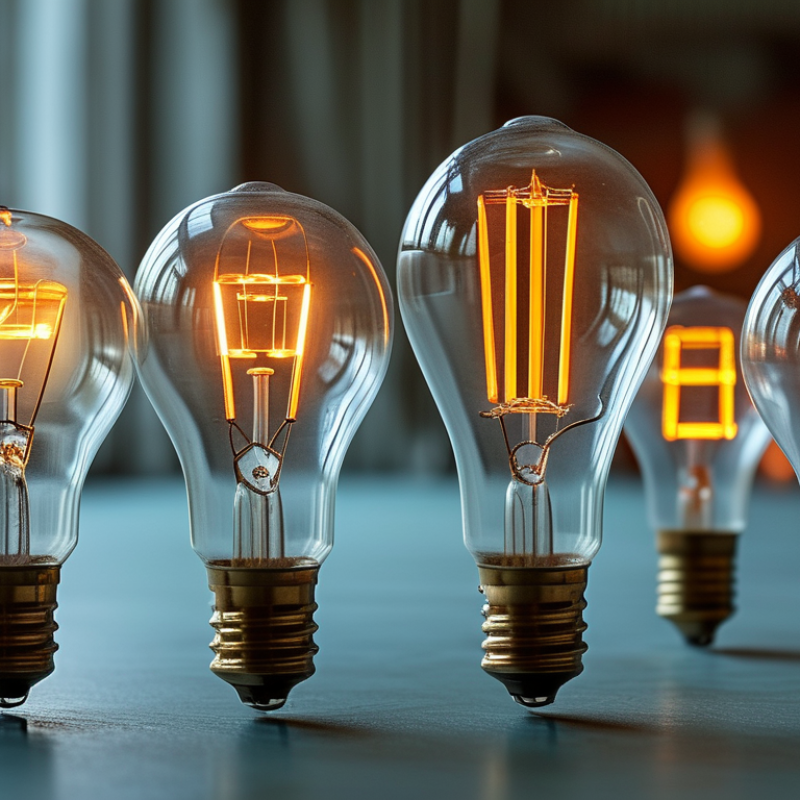
How LED Lights Produce Illumination
Why Do LED Lights Use Less Power Than Traditional Bulbs?
An LED does not glow by heating a wire. It produces light through electroluminescence, a process inside a tiny semiconductor. When electrical current enters the diode, electrons meet positively charged spaces called holes. Their movement releases energy as visible photons. This process is direct and controlled. Some energy still becomes heat, but far less is wasted than in an incandescent bulb.
An incandescent bulb sends current through a thin metal filament. The filament becomes extremely hot before it shines. Most of its electricity becomes infrared heat, not visible light. An LED usually directs more energy toward illumination, so it can produce similar brightness with lower power. A light-emitting diode also sends light through a lens, reducing unnecessary spill.
The color often comes from a blue LED and a phosphor coating. The coating changes part of the blue light into broader white light. A small electronic driver regulates current, keeping the diode stable. In a kitchen, this can mean bright light from a compact fixture without a visibly glowing, overheated filament. It feels simple, but the design is not flawless. Poor heat control can shorten performance, and claimed efficiency varies by product and temperature. I once assumed lower wattage always meant better light. It does not. Brightness, color accuracy, beam direction, and driver quality also matter.
Why Do LED Lights Use Less Power Than Traditional Bulbs?
LEDs produce illumination when electric current passes through a semiconductor and releases photons. Traditional incandescent bulbs heat a metal filament until it glows, converting most of the electrical energy into heat instead of visible light.
Typical comparison: LED bulbs provide similar brightness to incandescent bulbs while using substantially fewer watts.
How Traditional Bulbs Convert Electricity into Light
Traditional incandescent bulbs create light by heating a thin tungsten filament. Electricity meets resistance as it passes through the wire. The filament becomes extremely hot, often above 2,500°C. At that temperature, it glows and produces visible light. Much of its energy becomes infrared radiation, which we feel as heat. Only a small share reaches our eyes as useful illumination. The glass envelope protects the filament from oxygen, which would cause rapid burning. In a simple home observation, the bulb feels hot within minutes, even when its light seems modest. That heat is not a defect in operation. It is evidence of wasted electrical energy.
The filament also slowly evaporates during use. Its surface becomes thinner, and the bulb eventually fails. Traditional bulbs can produce warm, pleasant light, but their conversion process is inefficient. They must reach a high temperature before shining. An LED uses a semiconductor, so it creates light without heating a wire to incandescence. The comparison is not perfectly simple, because brightness, color, and circuit design affect measured power. Still, the basic difference remains clear: a traditional bulb spends most electricity on heat, while only a limited portion becomes visible light. A little heat is unavoidable. Too much is the problem.
Why LEDs Waste Less Energy as Heat
Why Do LED Lights Use Less Power Than Traditional Bulbs?
LEDs waste less energy as heat because they convert more electricity into visible light. An incandescent bulb releases about 90% of its energy as heat, according to the U.S. Department of Energy’s Energy Saver guidance. An LED still produces heat, but much less input power is needed for the same brightness. The difference is useful light per watt.
Consider a 60-watt incandescent bulb used four hours daily. Replacing it with a 10-watt LED can save about 73 kilowatt-hours each year. That calculation comes from simple operating data, not a sales promise. The International Energy Agency reports that lighting uses roughly 15% of global electricity. Small savings can multiply across homes, offices, and public buildings. The room may feel cooler near the lamp.
Heat has not disappeared. It has moved into the LED’s semiconductor and driver, where poor ventilation can shorten service life. During a retrofit, checking airflow matters as much as checking brightness. The U.S. Department of Energy reports that LEDs use at least 75% less energy than incandescent lighting and can last up to 25 times longer. However, real results vary with dimmers, fixture design, and lighting targets. A low-cost LED may perform poorly in a sealed fitting. The comparison is not perfect. More reflection is needed.
How LED Design Improves Electrical Efficiency
Why Do LED Lights Use Less Power Than Traditional Bulbs?
How LED Design Improves Electrical Efficiency
LED lights use less power because they convert electricity into light more directly. Traditional incandescent bulbs heat a metal filament until it glows. Much of their energy becomes infrared heat, which you can feel above the bulb. An LED uses a semiconductor junction instead. It produces light without heating a filament, so fewer watts can deliver similar brightness.
The electrical design also matters. An LED lamp usually includes a driver that changes household alternating current into controlled direct current. This driver regulates voltage and limits current, protecting the light-emitting components. Good regulation reduces wasted energy during voltage changes. A 9-watt LED can often provide brightness comparable to a 60-watt incandescent bulb, although actual performance depends on lumens, temperature, and optical design.
Small details still matter. Poor heat management can reduce efficiency over time. A compact lamp trapped inside a hot fixture may produce less light and age faster. Dimming adds another variable. Some dimmers waste energy or cause flicker when paired with unsuitable LEDs. Check the lamp’s rated lumens, wattage, and compatibility before installation. A plug-in power meter can reveal real consumption, including standby use. The explanation is not perfectly simple. Efficient design helps, but quality, heat, and electrical matching still shape the final result.
Why Do LED Lights Use Less Power Than Traditional Bulbs? - How LED Design Improves Electrical Efficiency
| Efficiency Dimension |
Incandescent Bulb |
Compact Fluorescent Lamp |
LED Lamp |
Why LED Design Is More Efficient |
| Typical Power for Approximately 800 Lumens |
60 W |
13–15 W |
8–10 W |
LEDs produce the required light with less electrical input. |
| Typical Luminous Efficacy |
10–17 lumens per watt |
45–70 lumens per watt |
80–120 lumens per watt |
More electrical energy is converted into visible light instead of heat. |
| Energy Converted to Visible Light |
Approximately 2% of input energy |
Approximately 7–15% of input energy |
Approximately 15–25% of input energy |
LED semiconductor materials emit light directly when current passes through them. |
| Energy Lost Mainly as Heat |
Very high; most energy becomes heat |
Moderate; energy is lost through heat and electrical operation |
Lower; heat is managed through a heat sink and circuit design |
LEDs avoid heating a filament until it glows, which is the main loss mechanism in incandescent bulbs. |
| Expected Operating Life |
About 1,000 hours |
About 8,000–10,000 hours |
About 15,000–25,000 hours |
LEDs have no fragile filament that repeatedly expands and contracts during operation. |
| Power Conversion Method |
Electrical current heats a tungsten filament until it glows |
Electrical discharge excites gas and phosphor coating |
A semiconductor junction converts electrical energy into photons |
Direct electroluminescence reduces unnecessary energy conversion steps. |
| Directional Light Control |
Light is emitted in nearly all directions |
Light is emitted in multiple directions |
Light can be directed with optical lenses and internal reflectors |
Better directionality reduces light wasted inside fixtures or outside the target area. |
| Estimated Annual Energy Use* |
65.7 kWh |
15.3 kWh |
9.9 kWh |
Lower wattage produces the same approximate brightness over the same operating period. |
| Estimated Annual Electricity Cost* |
$10.51 |
$2.45 |
$1.58 |
Lower energy consumption reduces operating cost when electricity prices are equal. |
*Annual estimates assume one lamp operates for 3 hours per day for 365 days. Energy cost is calculated at $0.16 per kilowatt-hour. Values are typical ranges for general-purpose lamps and may vary by design, light output, operating temperature, and power quality.
How Lower Power Use Affects Lighting Performance
Why Do LED Lights Use Less Power Than Traditional Bulbs?
An LED light produces brightness through a semiconductor, rather than heating a wire until it glows. Less energy becomes waste heat. More energy becomes visible light. A traditional bulb can feel hot after several minutes, even when the room remains dim. By contrast, an LED bulb may stay cooler and use far fewer watts for similar brightness. In practical terms, a 9-watt LED can often replace a 60-watt incandescent bulb. The exact result depends on lumens, beam angle, and fixture design.
Lower power use does not automatically mean weaker performance. LEDs can deliver steady illumination, clear color, and quick start-up. They also work well in task areas, such as kitchen counters or reading desks. However, performance depends on the internal driver and heat management. Poor ventilation can shorten service life and cause flicker. Dimming may also be uneven with incompatible controls. Small details matter.
I have noticed that efficient lighting changes how people use a room. A hallway can stay lit longer without creating the same energy demand. Still, efficiency is not the only measure. Some low-cost LEDs produce harsh light or inaccurate colors. That feels disappointing. Checking lumens, color temperature, color rendering, and dimmer compatibility gives a more reliable comparison. Energy savings matter most when brightness remains comfortable and useful.
Conclusion
Why do LED lights use less power than traditional bulbs? The answer lies in how efficiently they create illumination. LEDs use electrical current to energize a semiconductor, which releases light directly, while traditional incandescent bulbs heat a metal filament until it glows. Because producing intense heat is the main part of an incandescent bulb’s operation, much of its electricity becomes wasted thermal energy rather than visible light.
LED design also improves electrical efficiency through compact components that control current and direct light more effectively. Their focused output can provide useful brightness with less electricity, reducing energy consumption during everyday use. Lower power demand does not necessarily mean weaker performance; LEDs can deliver consistent illumination, start instantly, and maintain their brightness over long periods. Although lighting results depend on factors such as design, color, and placement, the basic advantage remains clear: LEDs transform a greater share of electrical energy into useful light and a smaller share into unwanted heat.

 Glow Flashlight