China’s leading solar-light makers compete on more than brightness and price. They also offer a practical way to illuminate garden paths, gates, and remote signs without drawing power from the grid. What makes solar-powered lights more eco-friendly than electric ones? In many settings, they use sunlight stored during the day instead of electricity generated from fossil fuels.
The climate difference can be significant, though comparisons need care. The IPCC’s Fifth Assessment Report estimates median lifecycle emissions of about 48 grams of CO2-equivalent per kilowatt-hour for solar photovoltaics, compared with roughly 820 grams for coal power. These figures describe electricity generation, not a direct test of individual lamps. Still, they show why replacing grid-powered lighting can reduce emissions where coal remains part of the electricity mix.
There is a trade-off. Solar lights contain panels, rechargeable batteries, wiring, and housings that require materials and manufacturing. A cracked panel or a battery that fails early can shorten a product’s useful life. That matters. Buyers should look for durable weather-resistant construction, replaceable batteries, clear capacity specifications, and accessible repair support—not just a high lumen claim.
China’s manufacturing scale gives shoppers a wide range of solar lighting designs, from compact stake lights to motion-sensing wall lamps. Their environmental value depends on how long they last, how well they are used, and how responsibly their components are handled at end of life. No lamp is impact-free. The better choice is often the one that provides reliable light for years with fewer replacements.
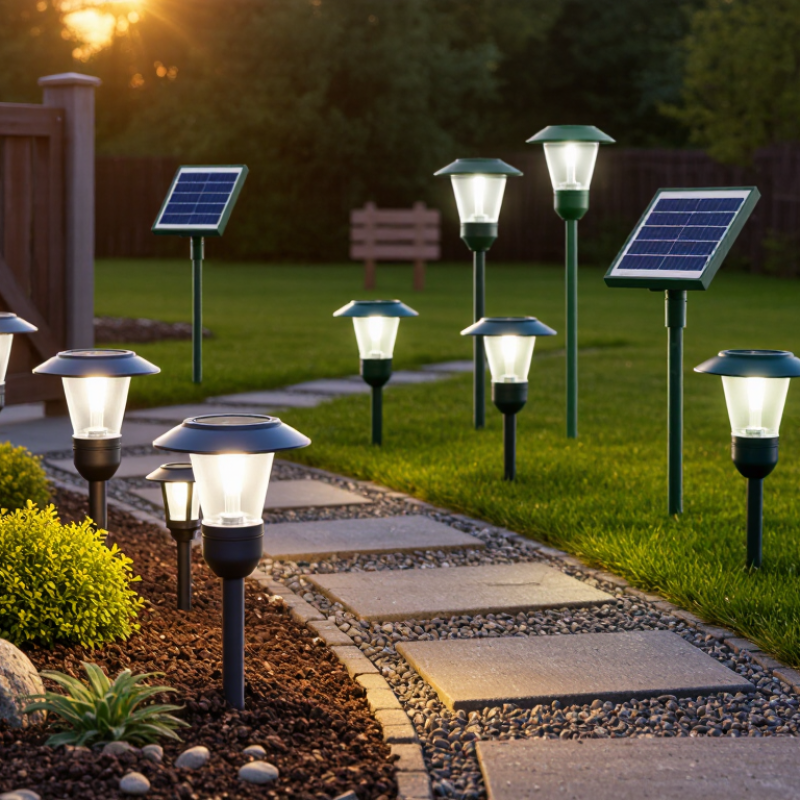
High-quality solar lights made in China are defined by verified performance, not a bright first impression. A reliable product pairs a well-matched panel, battery, and LED with clear lumen and runtime specifications. Lighting Global’s off-grid solar quality standards assess durability and truthful performance claims, offering buyers a useful benchmark beyond appearance. Look for documented testing and batch-level quality checks. Small details matter: sealed cable entries, firm panel mounts, and connectors that stay dry after rain.
Battery management is equally important. Protection against overcharging and deep discharge can help preserve battery life, while thermal testing checks performance in hot enclosures. Relevant benchmarks include IEC 60598-1 for luminaires and IEC 62133-2 for portable lithium batteries. Certification is not a guarantee of years of service, though. Installation, shade, dust, and maintenance still affect results.
Eco claims also need context. The IPCC’s Fifth Assessment Report gives median lifecycle emissions of about 48 g CO₂-equivalent per kWh for solar photovoltaic electricity, versus about 820 g for coal. These are power-generation benchmarks, not measurements of individual solar lights. Longer service life and replaceable batteries can strengthen the environmental case by reducing early disposal. I would still ask for independent test records; a polished specification sheet alone proves very little.
| Evaluation dimension | What to look for in a quality solar light | Environmental relevance | How to verify |
|---|---|---|---|
| Solar cell type and efficiency | Monocrystalline silicon panels are a common choice. Compare the panel’s rated output and area; cell efficiency varies by product and test conditions. | A more effective panel can collect more energy from limited roof or fixture area, but panel production also has an environmental footprint. | Check the panel’s wattage, dimensions, and test conditions on the product specification sheet. |
| Battery chemistry and service life | Look for a clearly identified rechargeable battery, stated capacity in Wh or mAh, and documented cycle-life conditions. LiFePO4 is one option used in some solar lighting products; performance depends on cell quality and operating conditions. | A durable, replaceable battery can reduce premature disposal. Battery production and end-of-life handling still have environmental impacts. | Ask for the battery datasheet, rated cycle life, replacement availability, and recycling or take-back guidance. |
| LED performance | Check measured light output in lumens, beam distribution, and power consumption. Compare complete-fixture performance rather than relying only on LED-chip claims. | Efficient, well-directed lighting can provide useful illumination with less stored energy and less wasted light. | Request test data for the finished fixture, including lumen output and photometric distribution. |
| Charging and operating time | Charging time and nightly runtime depend on sunlight, season, panel orientation, battery condition, and brightness settings. Look for results tied to stated test conditions. | Realistic performance information helps prevent oversizing, unnecessary replacements, and reliance on backup charging. | Check runtime at each brightness mode and whether the test used a full charge and specified weather or irradiance conditions. |
| Weather protection | For outdoor use, look for a declared IP rating and a product design suited to the intended exposure. IP65 indicates dust-tight protection and protection against water jets under defined test conditions. | Reliable weather protection can help extend product life and reduce electronic-waste turnover. | Request an IP test report for the complete assembled product; an IP rating does not guarantee resistance to every climate or installation condition. |
| Materials and repairability | Prefer robust housings, replaceable batteries or components where practical, and accessible repair instructions and spare parts. | Longer use and repair can reduce demand for replacement products and associated material use. | Check the bill of materials, component replacement options, warranty terms, and spare-parts policy. |
| Light control and dark-sky impact | Useful features include a timer, motion sensor, adjustable brightness, and a shielded beam aimed only where light is needed. | Dimming when full output is unnecessary can conserve stored energy. Reduced upward and spill light helps limit light pollution. | Review available modes, sensor settings, beam angle, and installation guidance. |
| Manufacturing and quality control | Manufacturing location alone does not establish environmental performance. Look for documented incoming-material checks, assembly testing, and traceable specifications. | Consistent quality can reduce defects and early product replacement; environmental performance also depends on materials, energy use, transport, and end-of-life management. | Request relevant factory quality records, test reports, and product-specific environmental documentation where available. |
| Overall eco-friendliness | Solar lighting uses sunlight to charge its battery and can operate without continuous grid electricity during use, when adequately charged. | Benefits depend on service life, operating conditions, battery replacement, materials, and responsible recycling. “Solar-powered” alone is not proof of a low lifecycle impact. | Compare expected service life, replaceability, energy performance, and end-of-life instructions rather than relying on a single eco claim. |
Note: Product performance varies by design, test method, installation, and local sunlight. Treat specifications as product-specific and verify them with test reports.
The LED is usually the main electrical load. Efficient LEDs can use at least 75% less energy than incandescent bulbs.
No. Excessive brightness can drain the battery and cause glare. More light is not always useful.
A dusk sensor switches the lamp on after dark. Motion sensors or dimming can reduce output when the area is quiet. A branch-triggered sensor can be wasteful.
The LED, battery capacity, panel size, local sunlight, and nightly use all matter. Shade or an aging battery can shorten runtime.
Sealed housings help keep out rain and dust. UV-resistant plastic and corrosion-resistant screws can also slow wear. Small details matter.
Some designs have accessible, replaceable batteries. Check that the replacement matches the light; compatibility is not always obvious.
Wipe dirt from the panel, clear leaves from the lamp, and inspect seals after harsh weather. It takes a little attention.
Production uses materials, energy, and water. Battery life and repairability affect how often a light must be replaced.
Replaceable batteries and accessible screws can make repair and material recovery easier. Sealed batteries and glued housings can make both harder.
Not necessarily. Sturdier materials may add weight, while lighter designs may wear sooner. There is no perfect trade-off.
High-quality solar lights made in China combine efficient photovoltaic panels, dependable batteries, and well-designed controls to turn sunlight into practical illumination. During the day, solar cells convert sunlight into electrical energy, which is stored for use after dark. Efficient LEDs, light sensors, and automatic controls help direct light where it is needed and reduce unnecessary energy use. What makes solar-powered lights more eco-friendly than electric ones? They can operate using energy gathered on site from sunlight, reducing reliance on electricity from the grid.
Durable construction also supports sustainability. Weather-resistant materials and sturdy designs can extend a light’s useful life, helping limit replacements and discarded components. Environmental considerations matter throughout production, too, including responsible material choices, efficient manufacturing, and attention to product repairability and end-of-life recycling. Together, energy-efficient components, renewable power, long-lasting designs, and thoughtful production can make solar lighting a practical way to reduce energy demand and waste.

 Glow Flashlight