Can Solar Powered Lights Charge on Cloudy Days Effectively?

Time:2026-03-20 Author:Oliver
0%

The question "Can solar-powered lights charge on cloudy days?" concerns many potential users of solar technology. Cloudy weather often leads to doubts about solar efficiency. People wonder if these lights can perform without full sunlight.

Solar panels rely on sunlight to generate energy. However, they can still absorb indirect sunlight on overcast days. This feature is crucial for areas with frequent clouds. Users may notice a reduced charging rate, but functionality remains.

Understanding this aspect is essential for optimally using solar-powered lights. Some may find the charging insufficient during long rainy spells. It raises a point for reflection: how much light is truly needed? The answer varies depending on individual energy needs and usage patterns. Exploring this can clarify the effectiveness of solar lights in diverse weather conditions.
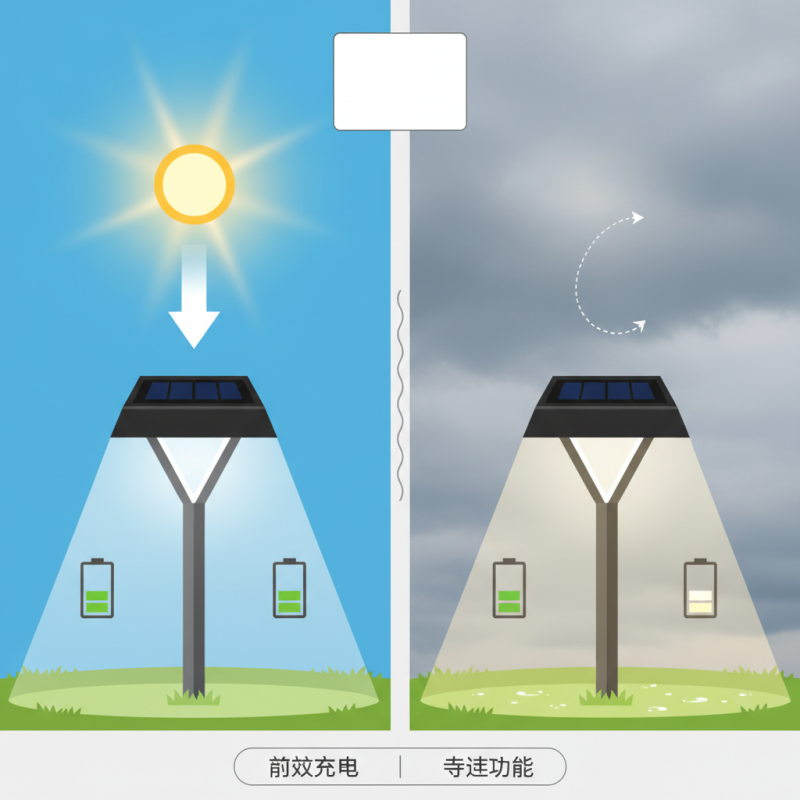
Can Solar Powered Lights Charge on Cloudy Days Effectively?

The Basics of Solar Powered Lights and Their Functionality

Solar powered lights function by converting sunlight into electricity. During the day, solar panels absorb sunlight. This energy charges the internal battery, allowing the lights to shine at night. But what happens on cloudy days? Do these lights maintain their efficiency?

On overcast days, solar panels still capture some sunlight. However, the energy produced is lower than on sunny days. The effectiveness greatly depends on the quality of the solar panel. Some panels are designed to work better in low light conditions. Yet, the overall performance may not meet expectations. Reflection and ambient light can help, but they usually fall short.

**Tips:** Always position solar lights in well-lit areas. Find spots that receive maximum exposure during the day. Consider investing in high-efficiency solar panels for better performance. Check the battery capacity and maintenance needs regularly. Ensure your lights are clean and free from debris to maximize efficiency. Remember, sometimes compromises are needed, and adjustments may improve overall performance.

Can Solar Powered Lights Charge on Cloudy Days Effectively? - The Basics of Solar Powered Lights and Their Functionality

Feature Description Effectiveness on Cloudy Days Best Use Cases
Photovoltaic Cells Convert sunlight into electricity Reduced efficiency, but still functional Gardens, pathways
Battery Storage Stores energy collected for use at night Charges more slowly, but retains some charge Outdoor lighting, security
Light Output Lumens produced by the light Possible decrease in brightness Patio, balconies
Installation Easy to install, no wiring required Quick setup; efficiency might vary Paths, driveways
Maintenance Minimal; occasional cleaning needed Low impact on cloudy charging General outdoor spaces

Understanding Solar Panel Efficiency in Varied Weather Conditions

Solar panels are designed to harness sunlight, but their efficiency varies in different weather conditions. On cloudy days, inefficiencies can arise. Research shows that solar panels can still produce 10-25% of their optimal output under overcast skies. This data surprises many as they assume no sunlight means no energy.

Understanding how solar panels work in less-than-ideal conditions is crucial. Light is made up of different wavelengths. Even on cloudy days, diffused light penetrates the atmosphere. This means panels still receive energy, albeit reduced. For instance, a study published by the National Renewable Energy Laboratory shows that certain panels perform better in diffuse sunlight. This could be an overlooked advantage.

Here are some tips for optimizing solar energy collection on cloudy days. Ensure your panels are clean and free from debris. Regular maintenance is key. Another tip is to install panels at an optimal angle. This can maximize light absorption during overcast conditions. Lastly, consider a battery storage system. This allows you to utilize energy generated even when the sun isn’t shining brightly.

It's important to remember that solar energy systems are not foolproof. They can be affected by shading, dirt, or environmental factors. Be prepared to adjust your expectations and strategies based on these realities.

Impact of Cloud Cover on Solar Energy Production and Light Charging

Cloud cover significantly affects solar energy production. On cloudy days, solar panels still generate electricity, but the output is reduced. Light clouds can filter sunlight, allowing some energy to be captured. However, thick clouds can block sunlight entirely. This variation can impact how effectively solar-powered lights charge.

Interestingly, even on overcast days, solar-powered lights can still function. They often rely on diffuse light, which is sunlight that scatters through the atmosphere. While their performance decreases, they aren't rendered useless. In some cases, solar lights may need longer exposure to charge adequately. Users should be aware of this limitation.

Many find themselves surprised by the results during cloudy weather. Some lights charge well despite less sunlight. Others, however, may struggle. It’s essential to consider location and the types of solar lights used. Not all systems perform the same under varying conditions. Reflection and local weather patterns further complicate the effectiveness of charging on cloudy days.

Statistical Data on Solar Energy Generation During Cloudy Days

Solar energy generation doesn't stop when the sun hides behind clouds. Surprisingly, up to 50% of solar energy can still be harvested on cloudy days. A report by the National Renewable Energy Laboratory states that solar panels can produce 10-25% of their total capacity in overcast conditions. This statistic showcases the resilience of solar technology.

Clouds diffuse sunlight, allowing solar panels to capture light even when direct sunlight is obstructed. A study from the Solar Energy Industries Association highlighted that regions with frequent cloud cover, like the Pacific Northwest, can still achieve solid energy outputs. In fact, solar installations in Seattle report an annual generation of around 80% compared to sunny locales.

However, there are nuances worth discussing. The efficiency of solar panels can vary greatly depending on their technology. Some panels perform better in low light than others. Moreover, the accumulated energy may not meet all energy demands. Users need to consider energy storage solutions to ensure availability during prolonged cloudy periods. Balancing expectations and reality is essential for optimal solar energy usage.

Innovative Technologies to Enhance Performance of Solar Lights in Low Light Conditions

Innovative solar lighting technology is advancing rapidly, especially for cloudy days. New solar lights can still function effectively, even when sunlight is limited. These products utilize improved photovoltaic cells that absorb diffused light. They can capture sunlight efficiently, even on overcast days.

Some systems now include battery storage that allows energy retention. This feature is crucial for maintaining performance during extended cloudy periods. Advanced sensors also help maximize output by adjusting to ambient conditions. The result is a more reliable light source.

However, challenges remain. Not all regions receive the same level of indirect sunlight. Some solar lights may underperform in extremely shady areas. Better understanding of local conditions is essential for users. Investing time in research ensures optimal performance, even in less-than-ideal weather.

FAQS

: Can solar panels generate energy on cloudy days?

: Yes, they can produce up to 50% of energy compared to sunny days.

How much energy can solar panels produce in overcast conditions?

Typically, solar panels generate 10-25% of their total capacity when cloudy.

Why can solar panels still work under clouds?

Clouds diffuse sunlight, allowing solar panels to capture indirect light.

Are some solar panels better in low light?

Yes, certain panels are designed to perform better in less light than others.

What can help solar panels during prolonged cloudy periods?

Energy storage solutions are essential for consistent energy availability.

How do innovative solar lights perform in low light?

They utilize improved photovoltaic cells to absorb limited light effectively.

Do all solar lights perform well in shaded areas?

No, some may underperform in extremely shady areas.

How can users ensure optimal solar light performance?

Understanding local light conditions is crucial for effective usage.

Is energy generation consistent in different regions?

No, energy generation varies greatly depending on regional sunlight levels.

What feature improves the reliability of solar lights?

Battery storage allows retention of energy for cloudy days.

Conclusion

The question "Can solar-powered lights charge on cloudy days?" is crucial for users considering solar technology for illumination. Solar-powered lights operate by converting sunlight into energy through solar panels, which can be affected by various weather conditions, including cloud cover. Although solar panels are generally less efficient on overcast days, they can still produce electricity, albeit at a diminished capacity. Understanding the efficiency of solar panels under various conditions is essential for maximizing their functionality.

Research indicates that while cloud cover can reduce solar energy production, innovative technologies are being developed to enhance the performance of solar lights in low-light situations. This includes advancements in solar panel design and energy storage solutions, enabling lights to charge and operate effectively even when natural sunlight is limited. Statistical data further reveals that solar energy systems can still generate significant energy on cloudy days, making solar-powered lights a viable option for consistent illumination.

Oliver

Oliver

Oliver is a seasoned marketing professional with a wealth of expertise in driving brand awareness and engagement. With a deep understanding of our company's product offerings, he consistently delivers high-quality content that enriches our professional blog. His insights not only shed light on......