Many people find themselves asking, "Why can't I get my rechargeable flashlight to work after charging?" This common issue can stem from various factors. Battery problems, charger compatibility, or internal circuit issues might all contribute to the frustration.
Experts like Jason Tyler, a lighting technology specialist, emphasize the importance of understanding these devices. He says, "Incorrect charging practices often lead to flashlight failures." Many users underestimate the need to follow charging instructions carefully. Overcharging or using an incompatible charger can compromise battery life and function.
Additionally, it’s essential to consider the environment. Extreme temperatures can affect performance. A flashlight stored in a hot garage may behave unpredictably. Users should regularly inspect their flashlights. This proactive approach might reveal issues before they become critical. Ignoring these small details can lead to larger problems down the line. Understanding your flashlight better can save time and effort in the long run.
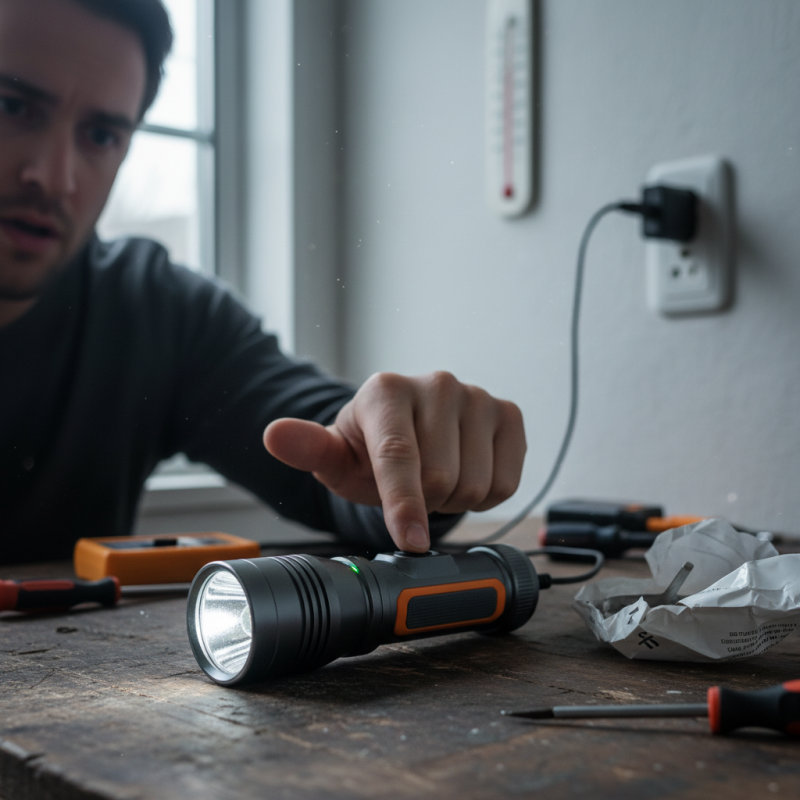
A rechargeable flashlight may fail to operate after charging for several reasons. One common issue is a faulty battery. The lifespan of most batteries is about 2-3 years. After that, they may not hold a charge effectively. If your flashlight is older than this, consider replacing the battery.
Another problem could be improper charging. Ensure that the flashlight is properly connected to the charger. Some chargers require specific voltage inputs. A mismatch can prevent charging altogether. Regularly check the charging port for dirt or damage, which could impede the connection.
Tips: Before assuming your flashlight is broken, try a different charger. Sometimes, the issue lies with the charger rather than the flashlight itself.
Additionally, inspect the flashlight’s LED bulb for damage. A burnt-out bulb can give the impression that your flashlight isn't working even after charging. Double-check the bulb connection as well; a loose connection may be the culprit.
Lastly, if you often forget to recharge, set a reminder. Keeping your flashlight charged regularly helps avoid unexpected failures.
This bar chart illustrates the common reasons why rechargeable flashlights may not work after charging, based on user feedback and troubleshooting reports.
Many people rely on rechargeable flashlights. They are convenient and eco-friendly. However, problems can arise after charging. Understanding battery types is crucial in troubleshooting flashlight performance.
Batteries commonly used in flashlights are Lithium-ion and NiMH. Lithium-ion batteries tend to offer higher capacity and longer life. However, they can also deplete quickly if not managed properly. NiMH batteries are more stable but might provide less power output. If your flashlight does not work after charging, it could be a compatibility issue.
Tips: Always check the battery type compatible with your flashlight. Regularly inspect the charging port for dust or damage. It’s helpful to cycle through the charge and discharge of the battery occasionally. This maintains battery health over time.
Another factor is temperature. Batteries can struggle in extreme heat or cold. Storing your flashlight in a stable environment helps. If your flashlight is still unresponsive, re-evaluate the condition of the batteries. Replacing even seemingly fine batteries can sometimes be necessary.
| Battery Type | Common Issues | Impact on Performance | Recommended Care |
|---|---|---|---|
| NiMH (Nickel-Metal Hydride) | Self-discharge issues, memory effect | Decreased brightness, shorter runtime | Regular full discharges, avoid overcharging |
| Li-ion (Lithium-ion) | Overheating, voltage drop | Inconsistent light output, potential damage | Keep cool, avoid deep discharges |
| Lead-Acid | Weight, sulfation | Poor performance in cold, limited cycles | Regular maintenance, avoid freezing |
| NiCd (Nickel-Cadmium) | Memory effect, toxic materials | Reduced capacity, environmental concerns | Full discharge cycles, proper disposal |
Charging a rechargeable flashlight properly is essential for it to function effectively. The recommended charging time usually ranges from 4 to 8 hours. Some modern models may support fast charging, reducing this time. However, overcharging can lead to decreased battery life. Regularly checking the manufacturer’s guidelines is crucial.
Tips: Always ensure the charging port is clean and free from debris. A dirty port can hinder the connection and result in inefficient charging.
When charging, keep the flashlight in a cool, dry place. High temperatures can affect battery performance. A study from the Battery University highlights that lithium-ion batteries degrade at temperatures above 85°F (29°C). Inconsistent charging habits can also confuse the battery management system.
Tips: Try not to let the battery fully deplete before recharging. Keeping it between 20% and 80% will help extend longevity.
If the flashlight doesn’t work after charging, inspect the battery. Sometimes, it may require replacement after prolonged use. However, recognizing the signs of battery wear is not always straightforward. Watch for reduced brightness or shorter run times. These indicators can signal the need for a new battery or further inspection of the device’s components.
Rechargeable flashlights are essential tools, but they can sometimes fail after charging. If your flashlight is unresponsive, there are several troubleshooting steps you can take. Recent industry reports indicate that battery issues account for around 30% of flashlight failures. Checking the battery connection is a crucial first step. Make sure the battery is seated properly. If it’s loose, your flashlight won’t work.
Another common issue lies in the charger or charging port. Dirt or debris can prevent charging. Clean the charging contacts gently with a soft cloth. If your flashlight uses lithium-ion batteries, remember they can degrade over time. Research shows they may lose about 20% of their capacity after two years of regular use. If your flashlight blinks or flickers when turned on, this may signal a dying battery.
Lastly, check for software issues in advanced flashlights, as some have built-in power management systems. A reset may help if the flashlight is equipped with such features. Many users overlook this simple solution. Sometimes, the simplest fixes can resolve complex issues. Stay proactive in maintaining your flashlight to ensure consistent performance.
A rechargeable flashlight is a handy tool. However, users often face problems after charging. To keep your flashlight in top condition, preventive maintenance is key. Regular maintenance is crucial for longevity. Studies show that proper care can extend the battery life by 20% or more.
Check the battery contacts frequently. Clean them with a dry cloth to ensure a good connection. Dirty contacts can lead to poor performance. Battery health is also essential. If your flashlight uses lithium-ion batteries, monitor their voltage. A voltage drop below 3.2V can indicate an issue. It's important to avoid overcharging. Prolonged charging can reduce battery efficiency.
Tip: Store the flashlight in a cool, dry place when not in use. Extreme temperatures can damage the battery. Regularly test your flashlight to ensure it works well. Frequent use keeps the connections clean and the battery charged. Addressing small problems can prevent larger issues later.
: A common reason could be a faulty battery. Batteries only last about 2-3 years.
Ensure the flashlight is connected properly to the charger. Check for dirt or damage on the charging port.
Regular maintenance helps. Clean battery contacts and store it in a cool, dry place.
Try using a different charger. The problem might not be with the flashlight itself.
Yes, a burnt-out bulb can make it seem like the flashlight isn't working after charging.
Set reminders to recharge it regularly. This prevents unexpected failures.
For lithium-ion batteries, monitor voltage. A drop below 3.2V indicates a potential problem.
Yes, storing it in extreme temperatures can damage the battery.
Overcharging can reduce the efficiency of the battery and affect its lifespan.
Regular testing is important. It keeps connections clean and ensures overall performance.
If you're asking, "Why can't I get my rechargeable flashlight to work after charging?" there are several factors to consider. Common issues include battery type compatibility and the overall health of the battery itself, which can significantly affect performance. Understanding your flashlight’s battery type is crucial since different types have varying lifespans and charging needs.
Additionally, it's important to follow the correct charging process, as overcharging or undercharging can lead to malfunction. If your flashlight remains unresponsive despite charging, troubleshooting steps such as checking the charging connections or testing with a different power source can help identify the problem. Regular preventive maintenance, including cleaning contacts and proper storage, can also prolong your flashlight's battery life and ensure it works effectively when you need it most.

Glow Flashlight