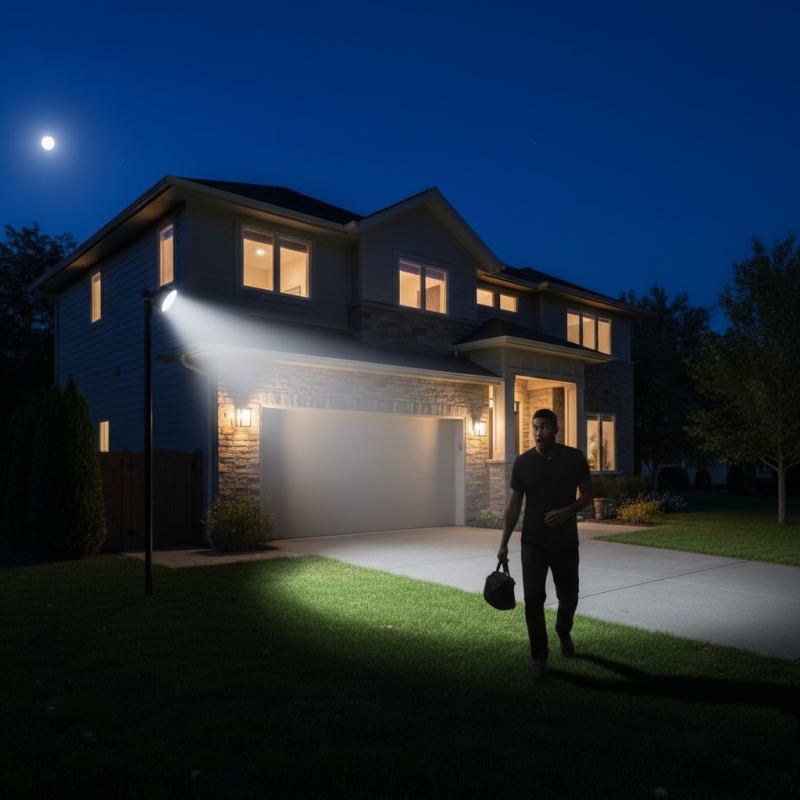
Motion sensor lights play a crucial role in enhancing home security. According to security expert Dr. Sarah Johnson, "The sudden illumination from motion sensors acts as a powerful deterrent against intruders." This highlights the effectiveness of motion sensor lights in preventing potential break-ins. By activating when movement is detected, these lights make it difficult for unwanted visitors to approach unnoticed.
Moreover, the strategic placement of motion sensor lights can cover vulnerable areas around a home, such as entryways and garages. These lights not only illuminate dark spots but also provide homeowners peace of mind. A sudden burst of light can startle trespassers and reveal their presence, bringing attention to suspicious activity.
However, relying solely on motion sensor lights may not be enough. Homeowners should also consider other security measures alongside. Proper maintenance is essential to ensure functionality. Otherwise, faulty sensors can create blind spots. In summary, understanding how do motion sensor lights improve home security is vital in creating a comprehensive approach to safeguarding your home.
Understanding Motion Sensor Lights and Their Functionality
Motion sensor lights are a crucial element in enhancing home security. These lights are designed to detect movement and illuminate areas when triggered. They utilize infrared technology to sense heat emitted by objects, such as people or animals. This feature allows for a rapid response when someone approaches your property, providing both a deterrent and a warning.
The installation of motion sensor lights can be straightforward and does not require extensive electrical knowledge. They are typically placed around entry points, such as driveways, walkways, and patios. When installed correctly, these lights can reveal potential threats effectively. However, placement is vital. Poorly positioned lights might miss scenarios or create blind spots. It is essential to review their coverage periodically.
Moreover, while these lights are beneficial, they can sometimes cause false alarms. Animals, passing vehicles, or even strong winds can trigger them. This may lead to complacency. Homeowners should periodically assess the sensitivity settings. Maintaining the right balance between sensitivity and reliability is necessary for optimal security. Regular checks ensure that these devices function properly and continue to protect your home effectively.
How Motion Sensor Lights Enhance Home Security Effectively?
| Feature |
Description |
Benefits |
Recommended Area |
| PIR Sensors |
Passive Infrared sensors detect movement by measuring the changes in infrared radiation. |
Accurate detection of intruders; minimizes false alarms. |
Driveways, Backyards |
| LED Technology |
Energy-efficient lighting that offers bright illumination. |
Long lifespan; reduces electricity bills. |
Entrance, Pathways |
| Adjustable Sensitivity |
Sensors can be tuned to detect various levels of movement. |
Customizable to avoid false triggers from animals or moving branches. |
Gardens, Patios |
| Smart Technology |
Integration with smart home systems for remote control and monitoring. |
Enhanced security through alerts sent to smartphones. |
Living Rooms, Offices |
| Weather Resistance |
Built to withstand outdoor elements such as rain and snow. |
Reliable operation in all weather conditions. |
Outdoors, Exterior Walls |
The Role of Motion Sensors in Enhancing Home Security
Motion sensors play a crucial role in enhancing home security. These devices can detect movement and trigger lights, alarms, or cameras, offering a robust deterrent against potential intruders. The sudden illumination of a previously dark area can startle anyone attempting unauthorized access. By providing an immediate visual cue, motion sensor lights create a sense of awareness and vigilance in neighborhoods.
When installing motion sensor lights, consider placement. Aim for areas with high foot traffic or blind spots. This can include driveways, backyards, and porches. A well-lit home makes it difficult for intruders to hide or maneuver unnoticed.
Additionally, ensure the sensors are positioned to avoid false alerts from pets or passing cars.
Tips for optimal use:
- Regularly check the sensor’s range and sensitivity. Adjust it based on seasonal changes or landscape growth. This will maximize effectiveness.
- Also, keep the lights clean and free from obstructions. Dirt and debris can hinder performance.
- Small maintenance tasks can significantly improve your home security system.
Key Benefits of Motion Sensor Lights for Homeowners
Motion sensor lights play a crucial role in enhancing home security. These lights activate upon detecting movement, providing immediate illumination. This feature creates a barrier against intruders. A study by the Institute for Criminal Justice suggests that homes with motion sensor lights report a 50% reduction in break-ins. Visibility deters potential threats, increasing safety for residents.
Another significant benefit lies in energy efficiency. Motion sensor lights only turn on when needed. This reduces energy consumption, which is essential for environmentally conscious homeowners. According to the U.S. Department of Energy, using motion sensors can lead to a 30% savings on electricity bills. Homeowners can enjoy well-lit spaces without incurring unnecessary costs.
However, these systems are not without flaws. For instance, false alarms can happen due to pets or environmental factors. Homeowners should assess the placement and sensitivity of the sensors. It’s important to strike a balance between security and convenience. Regular maintenance is necessary to ensure optimal performance. By addressing these issues, homeowners can fully harness the benefits of motion sensor lights.
Installation Tips for Effective Motion Sensor Security Lighting
Installing motion sensor lights can significantly enhance home security. According to the Security Industry Association, homes without security measures are 300% more likely to be broken into. Therefore, strategic placement of these lights is crucial. Aim for areas like entry points, driveways, and dark corners. Position lights about 6 to 10 feet high. This height deters intruders and reduces the chance of tampering.
When installing, consider the sensor's coverage area. Most motion sensors cover 120 to 180 degrees. Ensure they are directed towards high-risk zones. Sensors can be too sensitive, which may result in false alarms from pets or wildlife. Fine-tuning the sensitivity during installation helps minimize annoyances. Proper wiring is essential, especially for hard-wired models. Following local codes enhances reliability.
Be mindful of light positioning. Too bright can cause glare; too dim might not be effective. Always test your setup after installation. This phase is often overlooked. A simple test can reveal blind spots. According to the FBI, effective lighting can reduce crime rates quarterly in well-lit neighborhoods by 20%. Thus, an effective installation is vital for maximizing safety at home.
Combining Motion Sensor Lights with Other Security Measures
When it comes to enhancing home security, motion sensor lights offer a crucial advantage. However, they work best when combined with other security measures. Simply installing motion lights may not be enough to deter potential intruders. Integrating them with a security camera system can provide more comprehensive coverage. For example, a camera can capture footage of anyone approaching your property, while the lights make it clear that they are being watched.
Another effective combination is motion sensor lights with alarms. This duo creates a heightened sense of alertness. If the lights detect movement, they can trigger an alarm, drawing immediate attention to any unusual activity. This can be especially useful in darker areas around your home, where visibility might be limited. Yet, one consideration is the potential for false alarms. Pets or passing vehicles can sometimes trigger the sensors. Adjusting the sensitivity settings can help mitigate this issue.
While motion sensor lights add a layer of security, they should not be your sole defense. A robust security plan includes regular home audits, neighborhood watch programs, and secure locks. Balancing these elements leads to a more effective home security strategy. Reflecting on this can reveal areas for improvement in your setup, ensuring a safer living environment.
Effectiveness of Motion Sensor Lights in Enhancing Home Security
This bar chart illustrates the effectiveness rating of motion sensor lights in various aspects of home security. The categories include deterrence of intruders, detection of movement, average response time, energy efficiency, and cost effectiveness, with ratings ranging from 1 to 10. Overall, motion sensor lights are a vital component in enhancing home security when combined with other measures.
FAQS
: They enhance security by illuminating areas when movement is detected. This deters potential intruders and increases safety.
They activate only when needed, leading to a reduction in energy usage and savings on electricity bills.
Yes, pets or environmental factors can trigger false alarms. Placement and sensitivity settings must be adjusted to minimize this.
Install them at entry points, driveways, and dark corners. Position them 6 to 10 feet high to deter tampering.
Effective lighting can lower crime rates by 20% in well-lit neighborhoods, according to FBI statistics.
No, they work best with other security measures like cameras and alarms to enhance overall protection.
Test the setup after installation to identify blind spots. Proper wiring and following local codes are also important.
Adjusting the sensitivity can help reduce false alarms caused by pets or passing vehicles while maintaining effective monitoring.
Regular maintenance ensures optimal performance and addresses any issues that may arise, such as sensitivity mishaps or coverage gaps.
Reflecting on the placement and performance can highlight areas needing improvement, ensuring a safer environment.
Conclusion
Motion sensor lights are increasingly recognized as a crucial component in enhancing home security. Understanding their functionality reveals how these devices detect movement and illuminate spaces, effectively deterring potential intruders. So, how do motion sensor lights improve home security? By serving as an alert system, they can startle trespassers and draw attention to suspicious activity, providing homeowners with an added layer of safety.
The key benefits of motion sensor lights extend beyond mere illumination; they offer convenience and energy efficiency by only activating when needed. For optimal effectiveness, proper installation and positioning are essential, ensuring that the sensors cover vulnerable areas of a property. Additionally, when combined with other security measures such as cameras and alarms, motion sensor lights form a comprehensive security strategy, significantly reducing the risk of crime and enhancing overall peace of mind for homeowners.

 Glow Flashlight