How to Make LED Work Lights Last Longer in Harsh Conditions?

Time:2026-10-04 Author:Aria
0%

LED work lights often face dust, rain, vibration, heat, and sudden temperature changes. These conditions can shorten their useful life, even when the light has a strong housing. How to make your LED work light last longer in harsh conditions? The answer begins with daily handling, correct installation, and realistic expectations.

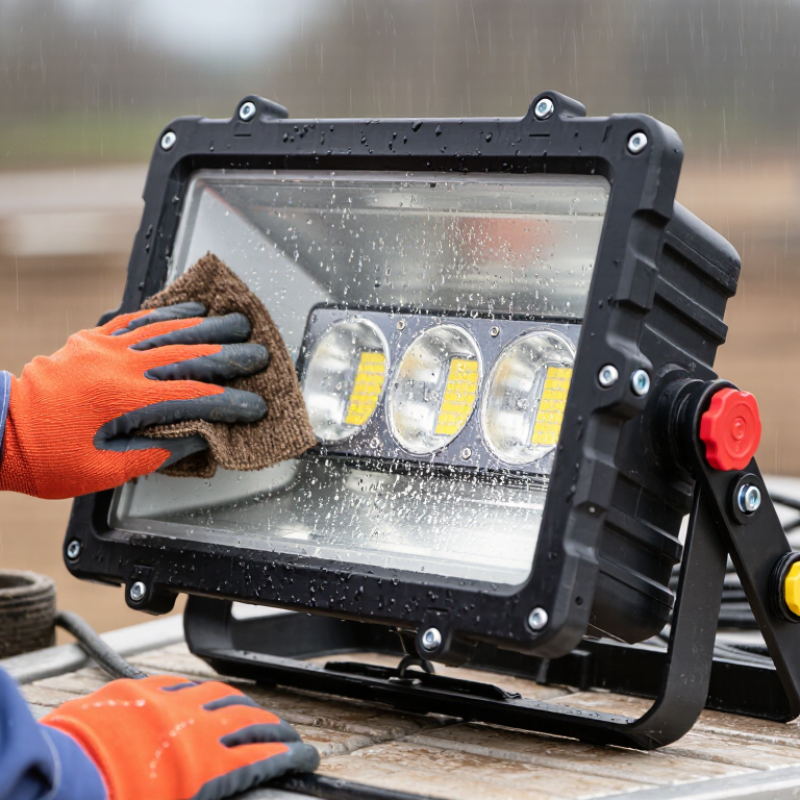
A durable light still needs protection. Check its IP rating before exposing it to water or fine dust. An IP65 model resists water jets, but it should not be submerged. Keep vents clear, because blocked airflow can trap heat around the LEDs and driver. Wipe mud from the lens with a soft cloth. Avoid abrasive cleaners that can cloud the cover. Small habits matter.

Vibration also deserves attention. Tighten mounting hardware without crushing rubber seals. Inspect cables for cuts, loose plugs, or stiff insulation. Use the power supply recommended by the manufacturer. Incorrect voltage can damage the driver and create unnecessary heat. Rechargeable models need proper charging and dry storage. Do not leave them inside a hot vehicle for weeks.

I have seen lights fail because users focused only on brightness. That was a mistake. Heat management often matters more than extra lumens. A brighter setting may be useful, but it can reduce operating life during long shifts. Let the unit cool when practical. Replace damaged seals early, not after water enters.

This guide combines field experience with manufacturer specifications and basic electrical practice. It will examine cleaning, mounting, charging, storage, and inspection routines. No work light lasts forever. Still, careful use can prevent avoidable failures and make reliable illumination available when conditions become difficult.
How to Make LED Work Lights Last Longer in Harsh Conditions?

Understanding the Challenges of Harsh Conditions for LED Work Lights

Harsh conditions expose weaknesses that ordinary indoor testing may miss. Heat raises LED junction temperatures and speeds up aging. Cold reduces battery output and can make plastic housings brittle. Moisture creates corrosion around connectors, switches, and circuit boards. Dust can settle on the lens and block light. Vibration may loosen fasteners or damage solder joints over time.

In field use, I have found that sealing alone is not enough. A sealed lamp can still overheat when mounted against a hot metal surface. Water may enter through a damaged cable sheath or a poorly closed connector. Check gaskets for flattening, cracks, and trapped grit. Keep ventilation paths clear, but do not wash hot equipment immediately. Sudden cooling can pull moisture inside. I once focused too much on brightness and overlooked cable strain. That mistake made the lamp unreliable.

Tips: Choose a work light with suitable ingress and impact ratings. Mount it away from direct engine heat when possible. Wipe dust from the lens before it forms a thick film. Inspect connectors after wet or dusty jobs. Let the lamp cool before storage. Test the light under real working conditions, not only in a clean workshop. A rating helps, but careful maintenance still matters.

Choosing Durable LED Work Lights for Demanding Environments

Choosing a durable LED work light starts with the environment, not brightness. In dusty workshops, select an enclosure rated at least IP65 under IEC 60529. IP67 is safer when temporary water immersion is possible. For impact-prone sites, check the IK rating under IEC 62262. A high IK value indicates tested resistance to mechanical impact.

Thermal control matters just as much. LEDs lose output when heat remains trapped behind a sealed housing. The U.S. Department of Energy’s solid-state lighting reports explain that LED useful life is commonly measured by L70, meaning output has fallen to 70 percent of its initial level. This is not the same as sudden failure. Look for published LM-80 test data and TM-21 projections, rather than trusting an impressive hour rating alone. Be cautious with vague claims.

In real maintenance work, examine the cable gland, switch seal, lens material, and mounting points. A strong lamp can still fail through a cracked connector. Choose impact-resistant lenses, corrosion-resistant fasteners, and cables suited to repeated bending. For cold storage, verify the operating temperature range; lithium batteries may deliver less power in freezing conditions. NIOSH workplace lighting guidance also stresses adequate illumination and reduced glare, so brightness alone is not enough. I have seen teams choose the brightest model, then abandon it because the glare caused errors. That choice needs reconsideration. Reliable performance often comes from balanced optics, protected electronics, and simple service access.

Protecting Lights from Moisture, Dust, Heat, and Impact

How to Make LED Work Lights Last Longer in Harsh Conditions?

LED work lights often fail for simple reasons: trapped moisture, clogged vents, excessive heat, or repeated impacts. In field maintenance, I have seen a bright light become unreliable after one rainy shift. The housing looked strong, but the cable entry was poorly sealed. Choose lights with a suitable ingress protection rating for the working environment. Still, ratings do not replace regular inspection. Seals can age, crack, or collect fine grit.

Tips: Keep lenses and cooling surfaces clean. Use a soft brush instead of compressed air near delicate seals. Dry wet lights before storing them. Do not leave them inside a hot vehicle for hours. Mount the light away from direct impact when possible. A rubber guard helps, but it cannot prevent every failure.

Heat deserves special attention. Dust on cooling fins acts like a blanket, raising internal temperature and shortening component life. Give the light room for airflow, especially during long shifts. Check mounting brackets for looseness, because vibration can damage connectors over time. I sometimes ignored small housing scratches, assuming they were harmless. That was not always wise; scratches can become entry points for water. Replace damaged seals, cables, or lenses before the next demanding job. A short inspection can prevent a dark work area later.

How to Make LED Work Lights Last Longer in Harsh Conditions? - Protecting Lights from Moisture, Dust, Heat, and Impact

Harsh Condition Main Risk to the Light Recommended Protection Level or Target Practical Protection Measures Inspection and Maintenance Guidance
Dust and fine particles Dust can enter through weak seals, reduce heat dissipation, contaminate connectors, and accumulate on the lens. Use an enclosure rated IP6X when complete protection against dust ingress is required. Choose sealed housings, protected switches, gasketed joints, and covered connectors. Avoid opening the light in dusty areas. Inspect seals and cable entries monthly in dusty environments. Remove dust with a soft brush or low-pressure air; do not block ventilation surfaces.
Rain, splashing, and water jets Moisture may cause corrosion, short circuits, lens clouding, and failure of switches or charging ports. For outdoor work, consider IP65 or higher. IP65 protects against dust and water jets; IP66 provides protection against more powerful water jets. Keep charging ports capped, route cables downward to create a drip loop, and use corrosion-resistant fasteners and sealed cable glands. After wet use, dry the housing and connectors before storage or charging. Replace compressed, cracked, or displaced gaskets immediately.
Temporary immersion or flooding Water can reach the driver, battery compartment, or electrical contacts if the enclosure is not designed for immersion. Use IP67 only where temporary immersion is expected. IP67 generally covers immersion up to 1 metre for up to 30 minutes under specified test conditions. Use a fully sealed housing and verify that every removable cover is correctly closed before exposure to water. Do not assume IP67 permits continuous underwater operation. Check for trapped water, condensation, or corrosion after any immersion event.
High ambient temperature Excess heat accelerates LED lumen depreciation, shortens driver life, and can reduce battery capacity and runtime. Operate within the manufacturer’s stated ambient-temperature range. As a general practice, keep the housing away from unnecessary heat sources and direct radiant heat. Keep heat-sink surfaces unobstructed, mount the light on a thermally suitable surface, and avoid enclosing it in insulation or airtight containers while operating. Check for unusual brightness reduction, flicker, or hot surfaces. Clean heat-dissipating surfaces whenever dust becomes visible.
Freezing temperatures Low temperatures can reduce battery output, increase charging time, make plastics brittle, and create condensation during warm-up. Use only within the specified operating and charging temperature ranges. Do not charge a battery that is outside its approved charging range. Allow the light to reach a suitable indoor temperature before charging. Protect cable insulation and lens materials from sharp impacts when cold. Inspect for condensation after moving between cold and warm areas. Store batteries according to the applicable battery safety instructions.
Drops, vibration, and impact Impact can crack lenses, loosen solder joints, damage switches, and deform seals or mounting brackets. For frequent mechanical abuse, consider an enclosure tested to IK08 or IK10. IK08 corresponds to 5 joules and IK10 to 20 joules under IEC 62262 test conditions. Use a protective bezel, impact-resistant lens, reinforced mounting points, and a lanyard or secondary retention system when working at height. After a drop, check the lens, housing, switch, battery compartment, and beam pattern. Remove any light with a cracked enclosure from wet service.
Chemicals, salt, and corrosive atmospheres Salt spray, solvents, fuels, and cleaning chemicals can attack coatings, plastics, seals, and electrical contacts. Select materials and coatings that are compatible with the specific chemical exposure; an IP rating alone does not confirm chemical resistance. Rinse salt deposits with clean water when appropriate, use compatible cleaners, and keep chemicals away from lenses, gaskets, and charging contacts. Inspect metal parts and contacts for discoloration, pitting, or white deposits. Replace damaged seals before the next exposure.
Condensation and rapid temperature changes Moisture can condense inside the lens or enclosure, causing corrosion and intermittent electrical faults. Use a properly sealed enclosure and follow the product’s environmental limits. Internal fogging should not be treated as normal for a permanently sealed light. Avoid opening the light while it is cold and humid. Store it in a dry, ventilated location and allow gradual temperature changes. If fogging persists, stop using the light until it is inspected. Check gasket compression, cracks, and cable-entry seals.
Poor storage and battery neglect Long exposure to moisture, extreme temperatures, or deep battery discharge can reduce reliability and service life. Store the light in a clean, dry area within the recommended storage temperature range. Follow the battery manufacturer’s storage and charging limits. Clean and dry the light before storage, protect the lens from abrasion, and prevent accidental switch activation during transport. Perform a functional test before each shift or deployment. Record runtime, charging behavior, visible damage, and inspection dates.

Note: IP and IK ratings describe specific laboratory test conditions. Always match the light’s certified ratings, operating temperature range, battery limits, and materials to the actual work environment.

Using Proper Installation and Power Management Practices

How to Make LED Work Lights Last Longer in Harsh Conditions?

Proper installation and power management often matter more than brightness. The U.S. Department of Energy reports that quality LEDs can last up to 25 times longer than incandescent lamps. That figure assumes acceptable operating conditions. Dust, vibration, moisture, and trapped heat can shorten service life quickly. Mount the light firmly, but avoid crushing its housing or cable. Leave space around heat sinks. A thin layer of dust can act like insulation, raising internal temperature. Small details matter.

Power quality deserves equal attention. Use a driver with the correct voltage and current range. Avoid undersized cables, loose terminals, and repeated voltage spikes. The DOE Energy Saver program states that LEDs use up to 75% less energy than incandescent lighting, but lower consumption does not excuse poor wiring. IES LM-80 and TM-21 methods also show why LED life projections depend on temperature and operating current. They are useful references, not promises. Real sites are messier.

Tips: Inspect connectors monthly. Clean lenses with a non-abrasive cloth. Do not seal vents with tape. Add surge protection where switching loads are common. Reduce brightness when full output is unnecessary. A cooler fixture usually lasts longer. Yet, dimming systems can also fail when poorly matched, so test them under load. I would not trust a long-life claim without checking its test conditions. That extra question can prevent an expensive replacement.

Inspecting, Cleaning, and Maintaining LED Work Lights Regularly

LED work lights often fail early because dust, moisture, and heat are ignored. Regular inspection catches small problems before they become expensive repairs. Before each demanding shift, check the lens, housing, cable, plug, and mounting bracket. Look for hairline cracks, loose fasteners, crushed insulation, or water behind the lens. A dim patch may indicate contamination, aging components, or poor electrical contact. Do not guess. Disconnect power before handling damaged equipment.

Clean the light only after it cools and is unplugged. Remove loose dust with a soft brush or clean, dry cloth. For oily film, use a slightly damp, lint-free cloth, then dry the surface completely. Never spray liquid directly into vents, switches, or charging ports. Avoid abrasive pads and harsh solvents, which can cloud the lens or weaken seals. I once wiped a hot lens and created a stubborn smear. That mistake taught me to slow down.

Inspect cooling fins and ventilation openings after cleaning. Blocked vents can raise internal temperatures and shorten LED life. In dusty workshops, weekly checks are more realistic than monthly checks. Tighten loose brackets gently, without crushing the housing. Examine cables near bends, where hidden damage often begins. Rechargeable models also need clean charging contacts and dry storage. Keep a simple maintenance log with dates, faults, and cleaning actions. It may feel excessive, but patterns become visible over time. We still miss things sometimes. A second inspection helps.

FAQS

Why do harsh environments damage LED work lights?

Heat accelerates aging, while cold reduces battery output. Moisture corrodes connectors and circuit boards. Dust blocks the lens. Vibration can loosen fasteners and solder joints.

What protection rating suits dusty work areas?

Choose at least IP65 for dusty workshops. Consider IP67 where temporary water immersion may occur. Ratings help, but maintenance still matters.

Does a sealed housing prevent overheating?

No. A sealed lamp can overheat against hot metal. Leave space around heat sinks and keep ventilation paths clear.

How should I inspect a work light after wet or dusty jobs?

Check gaskets for cracks, flattening, and trapped grit. Inspect cable sheaths, connectors, switches, and mounting points. Wipe the lens before dust forms a thick film.

What should I consider for impact-prone workplaces?

Check the impact rating and choose a strong lens. Use corrosion-resistant fasteners and secure mounting points. Firm installation should not crush the housing or cable.

How do cold temperatures affect LED work lights?

Cold can make plastic housings brittle and reduce battery power. Confirm the operating temperature range before using the light in cold storage.

How can proper wiring extend service life?

Use the correct voltage and current range. Avoid undersized cables, loose terminals, and repeated voltage spikes. Add surge protection where switching loads are common.

Is higher brightness always better?

No. Excessive glare can cause mistakes and make workers abandon the light. Balanced optics, protected electronics, and adjustable output are often more useful.

What does an L70 life rating actually mean?

L70 means light output has fallen to 70 percent of its starting level. It does not mean sudden failure. Check test conditions before trusting long-life claims.

What mistake can reduce reliability?

Focusing only on brightness can hide cable strain, heat buildup, or glare. I made that mistake once. Real-site testing would have exposed it sooner.

Conclusion

LED work lights often operate in demanding environments where moisture, dust, heat, vibration, and accidental impacts can reduce performance and shorten service life. How to make your LED work light last longer in harsh conditions? Start by selecting a durable light with strong housing, reliable sealing, effective heat management, and suitable resistance to water, dust, and impact. Choosing the right design for the intended workplace provides better protection from daily stress.

Proper installation and power management are equally important. Use stable power sources, compatible wiring, and appropriate voltage to help prevent overheating or electrical strain. Position the light securely and avoid exposing it to unnecessary shocks or extreme temperatures. Regular inspection and cleaning can also make a significant difference. Remove dust, dirt, and moisture from the lens, housing, and connections, while checking for loose parts, damaged cables, or weakened seals. With thoughtful selection, careful use, and routine maintenance, LED work lights can remain brighter, safer, and more dependable for longer periods.

Aria

Aria

Aria is a dedicated marketing professional with a deep passion for innovative strategies and a keen understanding of our company's product offerings. With a wealth of experience in the industry, Aria excels at crafting engaging content that highlights the unique features and benefits of our......