Top Camping Lights for Every Need How to Choose?

Time:2026-11-14 Author:Sophia
0%

A good camping light makes a campsite easier to use after sunset. It helps you find a zipper in a dark tent, prepare dinner, or follow a short path without stumbling over roots. But one bright lantern may not suit every job. A compact headlamp keeps both hands free, while a lantern spreads softer light across a picnic table. The right choice depends on where you camp, how long you stay, and what you need to see. Small details matter. A bulky light can take up precious pack space, and bright settings can drain a battery faster than expected. No light does everything well.

How to find the perfect camping light for your specific needs? Start by considering brightness, runtime, weight, and power source. Think about whether you need focused light for walking or broad illumination for a group. Check how the light is charged, whether it can use replaceable batteries, and how its stated runtime relates to the brightness setting. If rain is likely, review the product’s water-resistance rating rather than assuming it is weatherproof. These checks make comparisons more useful than choosing by price or a large lumen number alone. A few trade-offs are unavoidable: lighter models may offer less runtime, and feature-rich lights can be harder to pack. The guide below explores camping lights for different situations and explains what to weigh before buying. Some needs are easy to predict; others only become clear when the campsite gets dark.
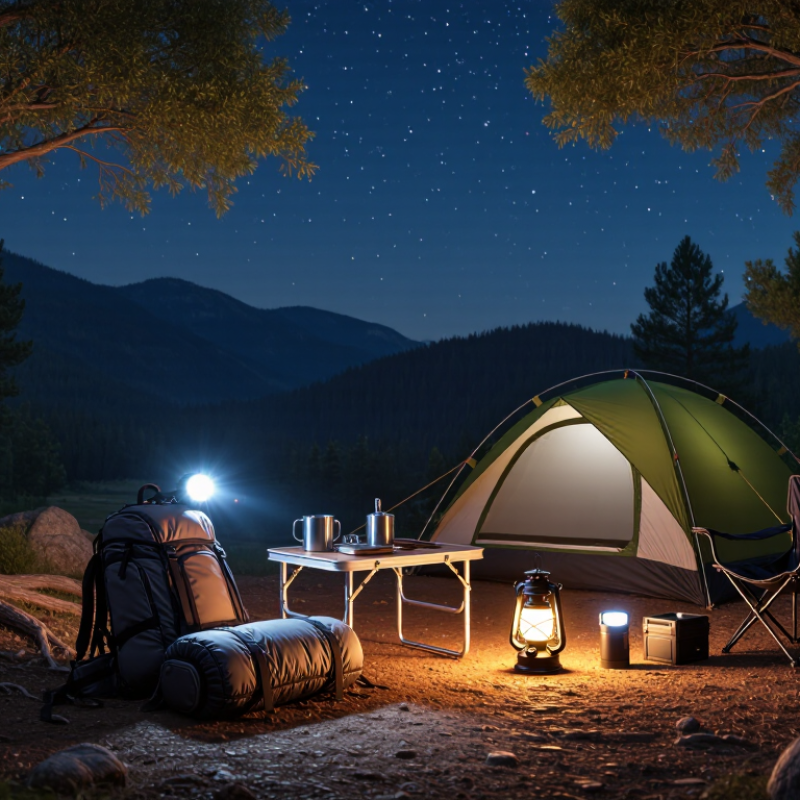
Top Camping Lights for Every Need How to Choose?

How Camping Lights Work and What They Are Designed to Do

Camping lights turn stored battery power into visible light through a simple electrical circuit. When switched on, current flows from the battery to one or more LEDs. A reflector directs some light forward, while a diffuser spreads it across a tent or table. The result depends on the design: focused beams help you spot a trail marker, while broad, softer light makes camp chores easier.

Brightness is often listed in lumens, but a higher number does not always mean a better camp light. Beam shape, battery condition, and distance all affect what you actually see. Warm-colored light can feel gentler inside a tent, while cooler light may make small objects easier to distinguish. Some lights offer several modes, but extra settings can drain batteries if used carelessly. I still find that advertised runtime can be hard to compare; temperature and brightness settings change the result.

Tips: Test the light before leaving home. Pack spare batteries or a charged power bank, and use a low setting for reading or late-night tasks. Keep the lamp stable on a flat surface, and avoid shining a bright beam into someone’s eyes. A small light can be enough. Consider where you will place it, not just how bright it looks in a product description.

Top Camping Lights for Every Need: How to Choose

How camping lights work—and the brightness ranges they are commonly designed to provide.

Lumens measure light output. Headlamps keep hands free, lanterns spread light around a campsite, and flashlights and area lights focus or cover larger spaces. Shown ranges are approximate examples, not fixed standards; actual output varies by model and setting. Choose a light for its intended task, beam pattern, runtime, and weather resistance—not brightness alone.

Common Types of Camping Lights and Their Best Uses

A headlamp is useful when setting up a tent, cooking, or sorting gear after dark. It keeps both hands free. A lantern spreads light across a picnic table or inside a larger tent, making it a practical choice for shared spaces. Look for a stable base and a dimming option; harsh light can make a small tent feel glaring. A flashlight or compact torch creates a focused beam for trails and checking distant spots, but it lights only a narrow area.

For general camp use, a lantern and headlamp often cover different needs better than one powerful light. Small string lights add a soft glow around a sheltered campsite, though they are poor task lights. Rechargeable models can reduce spare-battery clutter, while replaceable batteries may be easier to manage on longer trips without reliable charging. Check the light’s stated water-resistance rating and runtime, and remember that cold weather can shorten battery life. No single lamp is perfect. The brightest option can be tiring and waste power.

Tips: Test each light before leaving home. Pack a backup, even a small one. Use the lowest comfortable setting around camp, and point beams down to avoid shining them into someone’s eyes.

Key Features to Compare When Choosing a Camping Light

Compare camping lights by useful output, beam shape, runtime, weight, and weather protection—not by peak lumens alone. A focused beam helps spot a trail marker, while a broad lantern beam makes a cooking area easier to share. Check whether the published runtime applies to the brightest setting; manufacturers may report lower-output modes separately. Small detail, big difference. For energy efficiency, the U.S. Department of Energy’s Energy Saver guidance says LEDs use at least 75% less energy and can last up to 25 times longer than incandescent lighting. That supports choosing an efficient LED, but it does not tell you how long a particular battery will last.

Look for a clear battery specification, a low-light mode, and a charge indicator you can read in a tent. Replaceable batteries can be useful on longer trips; USB charging is convenient when power is available. Check the ingress-protection rating against likely conditions: IEC 60529 defines IPX4 as protection against splashing water, while IPX7 covers temporary immersion under specified test conditions. Neither rating makes a light indestructible. A sturdy hook or stable base matters when setting it beside a tent on uneven ground. I would also compare color temperature and glare; a very bright, cool beam can feel harsh after dark. The best choice depends on the task, and lumen figures alone leave some important questions unanswered.

Top Camping Lights for Every Need: How to Choose? — Key Features to Compare When Choosing a Camping Light

Compare common camping-light types by practical use, brightness, power, weather resistance, and portability.
Light Type Best For Typical Brightness Power and Runtime Considerations Weather Resistance to Look For Portability Main Trade-Off
Headlamp Hands-free tasks, night hiking, cooking, and setting up camp About 100–400 lumens for common camping use; higher settings are useful for brief tasks Often uses replaceable batteries or a rechargeable battery. Runtime can vary widely by brightness; a low setting generally lasts longer. Look for at least IPX4 for resistance to splashing rain; check the manufacturer’s rating and instructions. Very compact and lightweight; typically worn on the head or packed in a small pocket Creates a focused beam rather than broad, even light for a whole campsite
LED Lantern Lighting a tent, picnic table, or shared campsite area About 100–500 lumens for many portable models; adjustable brightness helps balance coverage and runtime May use disposable batteries, a rechargeable battery, or both. Runtime depends strongly on brightness and battery capacity. IPX4 can suit splash-prone outdoor use; a higher rating may be useful in wetter conditions. Easy to carry or hang, but usually bulkier than a headlamp Provides area light, but is less suitable for seeing a distant trail
Handheld Flashlight Checking trails, spotting objects at a distance, and keeping a backup light About 200–1,000 lumens across many general-purpose models; beam distance and beam shape also matter Battery type and runtime differ by model. High-output modes usually consume power faster and may produce more heat. For regular outdoor exposure, check for a stated IP rating; IPX4 indicates splash resistance, while IPX7 indicates tested temporary immersion. Compact and easy to store; requires one hand while in use A narrow beam can illuminate distant objects but may not light a group’s immediate surroundings evenly
Portable String Lights Adding low-glare light around a tent, awning, or dining area Often designed for gentle area lighting rather than a high-output beam; compare total lumens where provided Usually battery-powered or rechargeable. Check the stated runtime at the brightness setting you expect to use. Confirm that the lights and power unit are rated for outdoor use; connectors and battery compartments may have different protection levels. Lightweight when packed, but takes time to hang and arrange Good for atmosphere and nearby visibility, but not a replacement for a task light or trail light
Compact Emergency Light Keeping in a daypack, car kit, or emergency supply kit Often offers a low-power mode for nearby visibility and a brighter mode for short tasks; check the available settings May use replaceable cells, a rechargeable battery, or a hand-crank charging feature. Test it periodically and check battery storage guidance. Choose a stated weather-resistance rating suited to where it will be stored and used. Small and easy to keep accessible Compact size can mean less brightness, shorter high-output runtime, or fewer features

How to choose: Match the light to the task first, then compare usable brightness, runtime at the intended setting, battery type, weight, and weather-resistance rating. Lumens and runtimes vary by model and test conditions; consult the product specifications for exact figures.

How to Match a Light to Your Camping Style and Conditions

Match the light to the job, not just the campsite. A headlamp keeps both hands free for tent poles, stove controls, and a midnight walk. A lantern suits shared meals, while a narrow-beam flashlight helps reveal trail markers. At a windy site, favor a stable base and weather resistance; at a sheltered car camp, weight matters less.

Battery life matters when outlets are distant. The U.S. Department of Energy’s Energy Saver guidance says LEDs use at least 75% less energy than incandescent lighting and can last up to 25 times longer. That does not guarantee a specific lamp’s runtime. Brightness, battery size, and cold temperatures still matter. Check runtime at different brightness levels, not just maximum lumens. Cold nights bite. Keep spare batteries warm in a pocket, and test the dim setting before leaving home.

At wildlife-sensitive or shared campsites, use the lowest useful output and aim the beam down. A red-light mode can help with map reading, but check that its controls work with gloves. I used to assume brighter meant better; it can also mean a heavier pack and less time at high output. That trade-off is easy to miss.

Safe Use, Charging, and Care for Camping Lights

Top Camping Lights for Every Need: How to Choose?

Safe use starts with where you place the light. Set lanterns on stable ground, away from tent fabric, sleeping bags, and loose gear. Even cool-running lights can become warm during long use. Keep flames and fuel-burning lamps outside enclosed tents, where smoke and carbon monoxide can build up. Check the casing and cable before each trip. A cracked cover or frayed wire is a reason to stop using the light.

Tips: Keep a small light within reach, but not under bedding. Aim beams toward the ground to protect night vision. Test switches and brightness settings at home, not in the dark at camp. Easy to forget.

Charge rechargeable lights with the cable and power source recommended in their instructions. Keep charging devices dry and shaded, and unplug them when charging is complete. Don’t charge a swollen, unusually hot, or damaged battery. Let it cool before packing. After a trip, wipe away dust and moisture with a soft cloth, then store the light in a cool, dry place. I’d check the battery before every outing; it’s easy to assume it still holds a charge.

FAQS

How does a camping light produce light?

Battery power flows through a circuit to LEDs. A reflector focuses some light, while a diffuser spreads it.

Do more lumens always mean a better camping light?

No. Beam shape, distance, and battery condition affect what you see. A high number can still feel harsh.

Which light works best for hands-free tasks?

A headlamp keeps both hands free for pitching a tent or sorting gear. Aim it down to avoid dazzling others.

When is a lantern more useful than a flashlight?

A lantern spreads light over a table or tent. A flashlight sends a narrower beam toward a trail or distant object.

Are string lights suitable for cooking or other camp chores?

They add a soft glow around camp, but usually do not provide focused task lighting. A headlamp is more practical.

How can I make a camping light’s battery last longer?

Use the lowest comfortable setting and switch off extra modes when they are not needed. Cold weather can shorten runtime.

What should I check before charging a rechargeable light?

Follow its instructions and keep the charging area dry. Do not charge a swollen, unusually hot, or damaged battery.

How should I care for a camping light after a trip?

Wipe away dust and moisture with a soft cloth, then store it somewhere cool and dry. Check the battery before leaving; I still forget sometimes.

Conclusion

Camping lights help you see around your campsite, move safely after dark, and make everyday tasks such as cooking or reading easier. Different designs suit different purposes: lanterns provide broad, shared illumination, headlamps keep your hands free, and compact flashlights or string lights can be useful for focused tasks or a softer atmosphere. When comparing options, consider brightness, beam pattern, battery life, weight, durability, weather resistance, and how the light is powered.

How to find the perfect camping light for your specific needs? Start with your camping style and conditions. A lightweight, rechargeable light may suit short trips, while longer outings may call for extended battery life or a reliable backup. Think about whether you need hands-free lighting, a wide glow for a group, or a focused beam for walking. Use lights as directed, keep them dry when required, charge and store them carefully, and check their condition before each trip.

Sophia

Sophia

Sophia is a dedicated marketing professional with an exceptional depth of knowledge about her company's products and services. With a keen understanding of market trends and customer needs, she crafts insightful blog posts that not only inform but also engage readers, enriching the company’s online......