When selecting a waterproof flashlight, various aspects come into play. A high-quality flashlight can make a significant difference in outdoor adventures or emergencies. However, not all waterproof flashlights are created equal. It's essential to focus on durability, brightness, and battery life.
What are the key features to look for in a waterproof flashlight? First, consider the IP rating. A higher rating indicates better water resistance. Next, examine the construction materials, as robust options like aluminum can enhance longevity. The beam intensity should also align with your needs; bright light can be crucial in dark conditions.
There are many options on the market. Some may promise high performance but lack practical features. It can be tempting to choose the flashiest model. However, focusing solely on specifications might not meet your actual needs. Always reflect on how you plan to use it. Prioritize functionality over flashy add-ons. Finding the right waterproof flashlight involves more than just technical specs; it’s about choosing a reliable companion for your adventures.
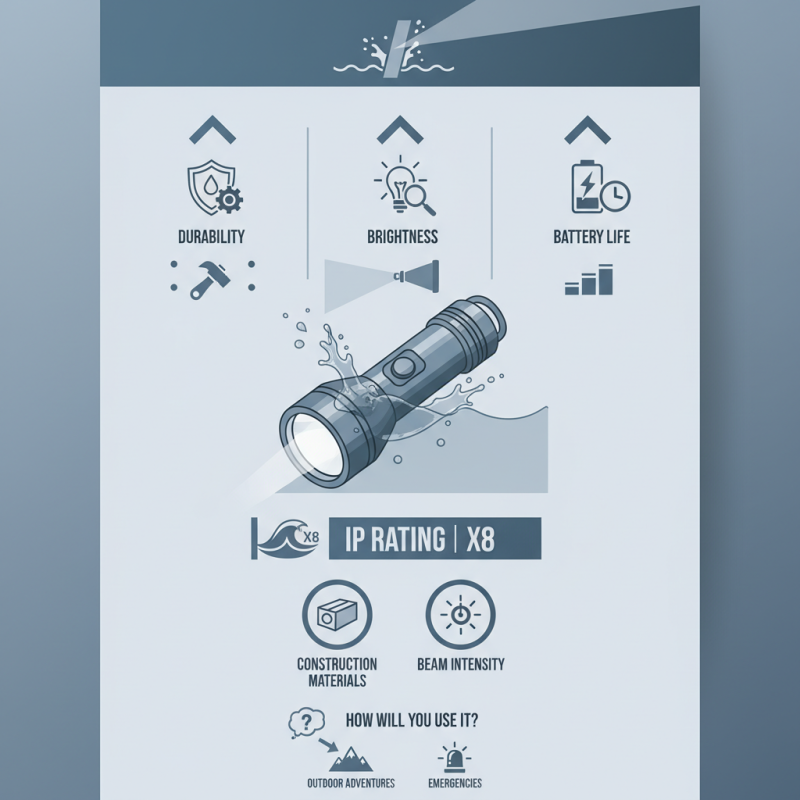
When selecting a waterproof flashlight, understanding the IPX rating is crucial. The IPX rating system defines how well a flashlight can resist water exposure. Ratings range from IPX0, which offers no protection, to IPX8, where devices can be submerged in water beyond 1 meter for extended periods. According to a study by the International Electrotechnical Commission, devices rated IPX7 can withstand immersion in water up to 1 meter for 30 minutes, making them ideal for various outdoor activities.
Another critical aspect is the impact resistance alongside waterproof features. A flashlight may boast a high IPX rating but lacks durability against drops and shocks. The ANSI/FL1 standards provide benchmarks for impact resistance, specifying how far a flashlight can fall without breaking. Many users overlook this when selecting a flashlight. A flashlight graded to survive a drop from 1 meter may still fail a drop test from a greater height.
Choosing a reliable waterproof flashlight isn't just about the numbers. Users must consider their specific needs. Some might need only occasional exposure to water, while others face harsh conditions regularly. Analyzing both the IPX ratings and impact resistance ensures a more informed choice. Even with accurate ratings, real-world experiences may reveal deficiencies. Understanding these complexities is vital for buying decisions.
When choosing a waterproof flashlight, brightness is a crucial factor. Measured in lumens, brightness impacts visibility. A flashlight with 200 to 1000 lumens suits various needs. Lower lumens are gentle on the eyes, while higher ones are powerful for outdoor adventures. Too much brightness can cause glare, making it hard to see. Finding a balance is key.
Battery life matters significantly, especially in emergencies. A flashlight that lasts at least 10 hours on low settings is ideal. Features like rechargeable batteries can provide convenience. However, it's important to remember that battery life may vary under different conditions. Sometimes, a long-lasting flashlight may not maintain its brightness. Keep this in mind when making your choice.
Size plays a role in usability. Compact models are easy to carry. Larger flashlights may provide more power and features. However, their bulkiness can be impractical. Consider your primary use. A large flashlight may fit home use, while a smaller one is better for hiking. Reflect on what suits your lifestyle best. Each choice comes with its pros and cons, so weigh them carefully.
When it comes to waterproof flashlights, the choice of materials is crucial. The right material ensures durability and longevity in diverse environments. Flashlights often face wet conditions, and subpar materials can quickly degrade. Common materials include aluminum and high-grade plastics, both of which offer resilience.
Aluminum provides sturdiness but can be heavy. It withstands drops and impacts well. On the other hand, high-grade plastics are lightweight and resistant to corrosion. They can be less durable in extreme conditions but offer adequate protection in light rain.
It's important to consider how a flashlight is used. For outdoor adventurers, a robust construction is a must. We often overlook the consequences of a flimsy flashlight breaking in critical moments. Consider testing material resistance. A simple scratch test can reveal much about a flashlight's durability. Understanding these properties empowers users to make informed decisions.
When choosing a waterproof flashlight, beam distance and focus are critical features to examine. A flashlight’s beam distance refers to how far the light travels effectively. This measurement directly impacts visibility in darkness or underwater. For instance, a flashlight with a 100-meter beam can illuminate much farther than a 50-meter one. Consider the tasks you may encounter. If you plan on hiking, a longer beam could enhance your safety by revealing obstacles ahead.
Focus enhances the versatility of beam output. Adjustable focus lets users switch between a wide floodlight for close tasks and a concentrated spotlight for distant visibility. This adaptability is particularly useful in outdoor settings. A beam that can focus tightly can uncover details from far away. Conversely, a broader beam provides more light in immediate surroundings. However, not every waterproof flashlight will have this feature. Some might excel in beam distance but fall short in focus precision.
It’s worth noting that the brightness of the beam also varies among models. A high lumen count indicates strong output, but it may drain the battery quicker. Testing the beam at various distances and focus settings is essential. Effectiveness can differ based on environment; darkness versus light can impact your experience. Carefully considering these aspects while shopping ensures a flashlight that meets your specific needs.
Choosing a waterproof flashlight involves considering various real-world scenarios. Many people find themselves in situations where reliable lighting is essential. For hikers, a sudden rainstorm can turn a peaceful trek into a challenging survival situation. A waterproof flashlight ensures that even when exposed to water, it continues to function properly. This can be a lifesaver when navigating through dark trails.
Waterproof flashlights are also vital for boating enthusiasts. Accidental drops into water happen frequently. A flashlight that can endure splashes or full submersion gives peace of mind during nighttime outings. Also, fishermen often work in damp conditions. Having a reliable light source that resists water damage is crucial for safety and visibility.
However, not all waterproof flashlights perform well under every condition. Some models may claim to be waterproof but fail in extreme circumstances. Checking user reviews and expert recommendations can help avoid disappointments. Even the most robust flashlight may face challenges in harsh environments. This highlights the need to choose wisely based on intended use.
: Material ensures durability and longevity in wet conditions. Poor materials can degrade quickly.
Aluminum and high-grade plastics are typical choices. Both offer resilience in various situations.
Aluminum is sturdy and withstands drops. However, it can be heavier than alternatives.
These plastics are lightweight and corrosion-resistant. Yet, they may not be as durable in extreme conditions.
Use one during hikes, boating, or fishing. Reliable lighting is essential in wet and dark environments.
No, performance varies. Some may fail despite being labeled waterproof. Check reviews before purchase.
Try a simple scratch test on the material. It can reveal how well it may hold up over time.
A flimsy flashlight can break when needed most. This can lead to dangerous situations, especially outdoors.
Consider your intended use and environmental conditions. Researching options helps avoid potential disappointments.
Think about weight versus durability. Lightweight options may lack strength in critical moments.
When selecting a waterproof flashlight, it's essential to understand the significance of waterproof ratings, specifically the IPX standards, which indicate the level of water resistance. Key features to look for in a waterproof flashlight include brightness, battery life, and the size of the device. Durability is also critical; materials used in the flashlight should withstand harsh conditions without compromising functionality.
Additionally, evaluating beam distance and focus helps ensure that the flashlight provides the right illumination for various situations. Real-world use cases could guide your choice, as certain environments may require more reliable waterproofing and performance. Overall, identifying what are the key features to look for in a waterproof flashlight will help you make an informed decision that suits your needs.

Glow Flashlight