How to Choose a Rechargeable Flashlight for Daily Use?

Time:2026-10-19 Author:Madeline
0%

Choosing a rechargeable flashlight for daily use involves more than comparing maximum lumens. A reliable model should match real situations, such as finding keys beside a parked car or checking a dark hallway during a power outage. What are the benefits of using a rechargeable flashlight for daily use? The answer includes lower battery waste, convenient charging, consistent performance, and fewer replacement purchases. However, rechargeable does not automatically mean better. Battery quality, charging safety, and long-term capacity matter.

Grand View Research identifies rechargeable products as an important growth area within the global flashlight market. Its industry analysis connects this growth with convenience, energy efficiency, and broader consumer adoption. The U.S. Department of Energy’s battery research also emphasizes durability, charging performance, and lifecycle value. These findings support a practical buying approach, not a race for exaggerated brightness. A 1,000-lumen flashlight may heat quickly and drain its battery faster. Sometimes, 300 useful lumens are enough.

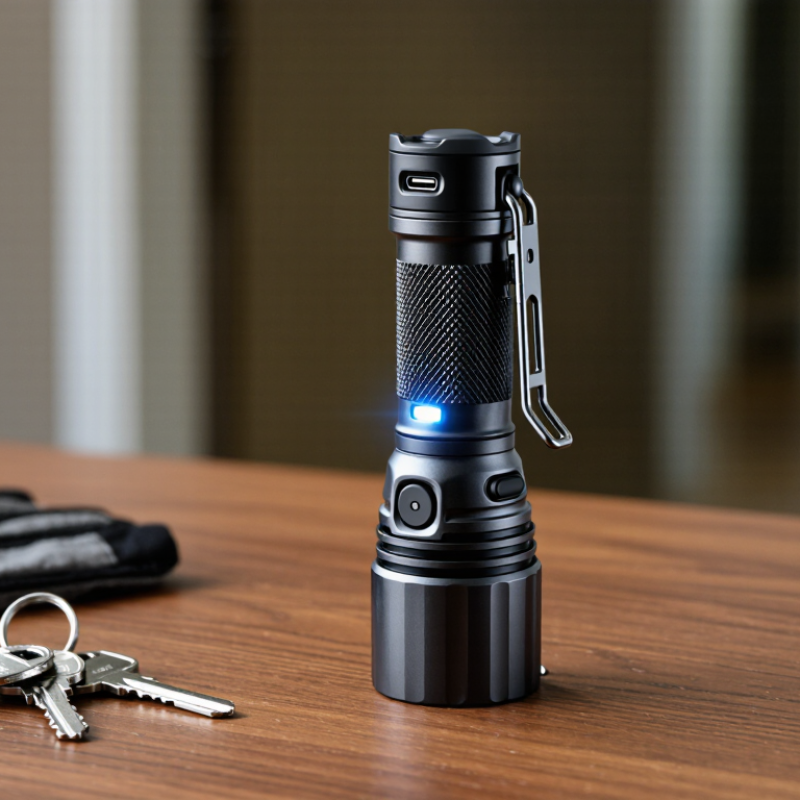
Look for test information based on the ANSI/PLATO FL 1 standard. Check measured runtime, beam distance, impact resistance, and water resistance. An IPX rating can help when rain begins unexpectedly. USB-C charging is convenient, but inspect the port cover and charging indicator carefully. A flashlight that feels secure in one hand is easier to use with gloves. I have found that pocket clips can be more valuable than impressive specifications. The mistake is trusting marketing alone. Read independent reviews, compare manufacturer data, and consider whether replacement batteries remain available. Daily reliability is usually quiet, practical, and slightly boring. That is often a good sign.
How to Choose a Rechargeable Flashlight for Daily Use?

Key Features to Consider in a Rechargeable Flashlight

How to Choose a Rechargeable Flashlight for Daily Use?

Key Features to Consider in a Rechargeable Flashlight

A daily flashlight should feel useful before it feels impressive. During evening walks, I value a comfortable grip, a simple switch, and balanced weight. A very bright beam can be wasteful indoors. Around 300 to 600 lumens often suits household tasks, short outdoor trips, and power outages. Beam distance matters too. A wide beam helps nearby work, while a focused beam supports longer paths. Check whether brightness levels are easy to change with one hand.

Battery performance deserves careful attention. Look for a clearly stated runtime at each brightness level, not one generous number. Rechargeable lithium batteries can offer strong capacity, but heat and frequent full charging may reduce long-term performance. USB-C charging is convenient, especially during travel. A visible indicator prevents unpleasant surprises. I once ignored a weak charging light and carried an empty flashlight outside. That mistake changed my routine.

Water and impact resistance are practical features, not decorations. An IP rating can show protection against dust and water, but it does not make every flashlight waterproof forever. Choose a sealed design for rain and a durable body for accidental drops. The button should resist accidental activation inside a bag. A lockout function helps. Check replacement battery availability and charging safety information from reliable technical sources. Some models feel excellent in a shop but become slippery with wet hands. Test the texture, controls, and balance whenever possible.

Choosing the Right Brightness, Beam, and Battery Capacity

A rechargeable flashlight for daily use should balance brightness, beam shape, and battery capacity.

More lumens do not always mean better performance. ANSI/PLATO FL 1-2019 measures total light output, beam distance, peak beam intensity, and runtime under defined conditions. Use these figures together.

For indoor tasks, 150–400 lumens usually feels comfortable. A wide beam suits stairs, repairs, and reading.

A focused beam helps with distant signs or outdoor paths. Peak candela matters more than lumens when distance is important.

I learned this the hard way: an extremely bright light can create harsh glare on white walls. Adjustable output is often more useful than maximum output.

Battery capacity should match your routine.

Check watt-hours when comparing different battery voltages, using voltage multiplied by amp-hours. Then compare the claimed runtime with ANSI/PLATO testing, which measures usable light until output falls to 10 percent.

Real conditions differ. Cold weather, turbo modes, and aging cells reduce endurance. IEC 60529 ingress ratings can also guide daily reliability, especially around rain or dust.

Tips

  • Choose a medium setting for commuting and a lower setting indoors.
  • Look for a replaceable or serviceable battery when long-term use matters.
  • Test the grip with wet hands.
  • A flashlight that rolls away during a repair is not practical.
  • Also inspect charging indicators; vague signals can cause avoidable surprises.
  • Don’t trust capacity alone. Recharge time matters too.

Comparing Charging Methods, Runtime, and Battery Life

How to Choose a Rechargeable Flashlight for Daily Use?

Comparing Charging Methods, Runtime, and Battery Life

Charging method affects convenience more than many buyers expect. USB-C charging is practical at a desk, in a car, or beside a bed. A magnetic dock feels cleaner, but it may require a proprietary accessory. A flashlight using replaceable rechargeable cells offers flexibility during travel or long power outages. Check whether the charging circuit supports overcharge, overheat, and short-circuit protection. UL Solutions identifies these protections as important controls for lithium-ion battery safety.

Runtime figures need careful reading. The ANSI/PLATO FL 1 standard measures runtime until output falls to 10% of its initial level. Therefore, a claimed 10-hour runtime may include several hours of noticeably weaker light. I test a flashlight on the same setting, indoors, beside a wall clock. Heat matters too. High-output modes can make a small body uncomfortable within minutes. More brightness is not always better.

Battery life depends on charging habits and temperature. A technical review from Battery University reports that lithium-ion cells commonly provide about 300 to 500 full cycles, while heat and deep discharge accelerate aging. Treat that number as guidance, not a promise. My own mistake was leaving a light fully charged in a hot vehicle; capacity declined sooner than expected. For daily use, choose a model with a clear battery indicator, moderate output, and accessible charging. Small details matter.

Evaluating Size, Durability, Waterproofing, and User Comfort

A daily rechargeable flashlight should disappear in your pocket, not become another burden. I once chose a powerful model that felt awkward after ten minutes. A shorter body, balanced weight, and textured grip usually matter more than maximum lumens. Check whether your thumb can reach the switch while wearing gloves. Fit matters.

Durability needs measurable evidence. The ANSI FL1 standard defines runtime until output falls to 10% of the initial reading. This prevents inflated runtime claims from hiding a weak final hour. Look for stated impact testing, not vague words like “tough.” A light used near concrete, stairs, or a car should survive ordinary drops without a cracked lens. My own mistake was ignoring the pocket clip; a loose clip can be more frustrating than low brightness.

Waterproofing also needs careful reading. Under IEC 60529, IPX4 resists water splashes, while IPX7 covers immersion up to one meter for 30 minutes under test conditions. Those ratings are not permanent guarantees after damaged seals or repeated charging. Choose a protected charging port and inspect its gasket regularly. Test it wet, carefully. A compact body, dependable seal, and comfortable switch often outperform a larger light with impressive specifications. Still, comfort is subjective, and no standard fully measures how secure a flashlight feels during a long walk.

How to Choose a Rechargeable Flashlight for Daily Use? - Evaluating Size, Durability, Waterproofing, and User Comfort

Comparison values are representative specifications for common rechargeable flashlight formats. Actual performance may vary with battery condition, temperature, charging method, and usage.
Flashlight Type Length Weight Battery Capacity Typical High-Mode Runtime Drop Resistance Waterproofing Charging Method Grip and Comfort Daily-Use Rating Best Use
Compact Pocket Model 95 mm 68 g 1,000 mAh 1.5 hours 1 m IPX4
Splash resistant
USB-C Textured body; easy one-handed carry ★★★★☆ Commuting, drawers, car storage
Balanced Everyday Model 128 mm 112 g 2,600 mAh 2.2 hours 1.5 m IPX6
Strong water-jet resistance
USB-C with charge indicator Knurled grip; comfortable for extended use ★★★★★ Home repairs, walking, emergency use
Heavy-Duty Utility Model 155 mm 185 g 5,000 mAh 3.5 hours 2 m IP68
Dust-tight and submersible
USB-C with sealed port cover Deep grip texture; heavier in a pocket ★★★★☆ Outdoor work, storms, demanding conditions
Slim Pen-Style Model 142 mm 74 g 750 mAh 1 hour 1 m IPX4
Splash resistant
USB-C Pen clip; narrow barrel; low hand fatigue ★★★★☆ Work bags, inspections, offices
High-Output Outdoor Model 168 mm 230 g 5,000 mAh 2.8 hours 1.5 m IP67
Dust-tight and temporarily submersible
USB-C with battery indicator Wide handle; stable but bulky for daily carry ★★★☆☆ Property checks, trails, power outages
Keychain Micro Model sixty-five mm 28 g 350 mAh 45 minutes 1 m IPX4
Light splash resistance
USB-C Very portable; limited grip and beam reach ★★★☆☆ Keys, handbags, backup lighting

Matching Flashlight Types to Everyday Activities and Environments

Choosing a rechargeable flashlight for daily use means matching its design to real activities. High brightness alone is not enough. For commuting, shopping, and finding keys, a compact light with 100–300 lumens is often practical. A wide beam can brighten a doorway or dim stairwell. For walking a dog, choose a balanced model with a simple low mode. It reduces glare and saves battery power. I once bought an extremely bright flashlight for routine errands. It felt impressive, but its weight kept it in a drawer. That mistake changed my priorities.

Outdoor environments require different features. A focused beam works better on trails because it reaches farther along uneven ground. A wider beam may be safer around campsites, gardens, and parking areas. For rainy weather, check the product’s tested water-resistance rating instead of trusting vague wording. A sealed switch also helps when your hands are wet. Cold conditions can reduce battery performance, so a flashlight with a removable or replaceable battery may offer more flexibility. Specifications do not always match field experience.

For home repairs, a tail-standing design can illuminate a cupboard while leaving both hands free. A magnetic base helps under a sink, but magnets may fail on painted or nonmetal surfaces. Look for a charging indicator and a protected charging port. USB-C is convenient, though the cable can still be misplaced. Runtime claims deserve careful reading because manufacturers may measure them at lower brightness. Test the light in your own hallway, backpack, or car before depending on it. Practical confidence comes slowly.

How to Choose a Rechargeable Flashlight for Daily Use?

Match flashlight output to the activity and environment. Higher lumens are useful outdoors or during emergencies, while lower output is usually more comfortable for close-range tasks and helps extend battery life.

The figures show practical starting points for common daily situations. Actual requirements vary with weather, surface reflectivity, beam pattern, and the distance you need to see.

FAQS

How bright should a daily rechargeable flashlight be?

Around 300 to 600 lumens suits household tasks, short walks, and power outages. Smaller tasks may need only 100 to 300 lumens. More brightness is not always better. It can create glare indoors.

What beam pattern works best for everyday use?

A wide beam helps with keys, doorways, stairs, and nearby repairs. A focused beam reaches farther on paths and uneven ground. Some activities need both. Adjustable brightness is helpful.

Which charging method is most convenient?

USB-C charging works well beside a bed, at a desk, or inside a car. A magnetic dock looks tidy but may require special accessories. Replaceable rechargeable batteries offer flexibility during long outages. Cables disappear easily.

How should I judge the advertised runtime?

Check runtime at each brightness level, not one impressive number. Standard testing may measure time until light output becomes very weak. A claimed ten-hour runtime may include dim final hours. Test the same setting beside a wall clock.

How long can a rechargeable battery last?

Many lithium-ion batteries provide roughly 300 to 500 full cycles. Heat, deep discharge, and frequent full charging can shorten that period. Treat the figure as guidance, not a promise. I once left a flashlight in a hot car.

What safety features should a rechargeable flashlight include?

Look for protection against overcharging, overheating, and short circuits. A visible charging indicator helps prevent unexpected empty batteries. A lockout function reduces accidental activation inside a bag. Safety details matter.

What water and impact protection is useful?

Choose a tested water-resistance rating for rainy conditions. A sealed switch helps when hands are wet. A durable body can survive accidental drops. Water resistance does not mean permanent waterproofing.

Which flashlight design suits home repairs?

A tail-standing design can illuminate a cupboard while leaving both hands free. A magnetic base may help under a sink or beside metal shelving. Magnets can fail on painted or nonmetal surfaces. Test the light at home first.

Conclusion

Choosing the right rechargeable flashlight for daily use means balancing brightness, beam distance, battery capacity, charging convenience, and overall comfort. A suitable model should provide enough light for common tasks without unnecessary bulk or excessive power consumption. Consider whether you prefer a focused beam for distance, a wider beam for nearby areas, or adjustable brightness for different situations. Battery capacity affects runtime, while charging methods such as USB can make regular use more convenient. It is also helpful to compare charging speed, battery life, and indicators that show when the flashlight needs power.

What are the benefits of using a rechargeable flashlight for daily use? It can reduce the need for disposable batteries, lower long-term maintenance costs, and remain ready for repeated use. When selecting one, evaluate its size, grip, durability, water resistance, and resistance to everyday wear. Compact lights suit commuting and household tasks, while stronger, weather-resistant designs may be better for outdoor activities. The best choice should match your routine, environment, and preferred balance of portability, reliability, and performance.

Madeline

Madeline

Madeline is a dedicated marketing professional with a wealth of expertise in our company's core offerings. With a keen understanding of the industry, she brings a unique perspective to her role, consistently delivering high-quality content that highlights the superior aspects of our products. As......