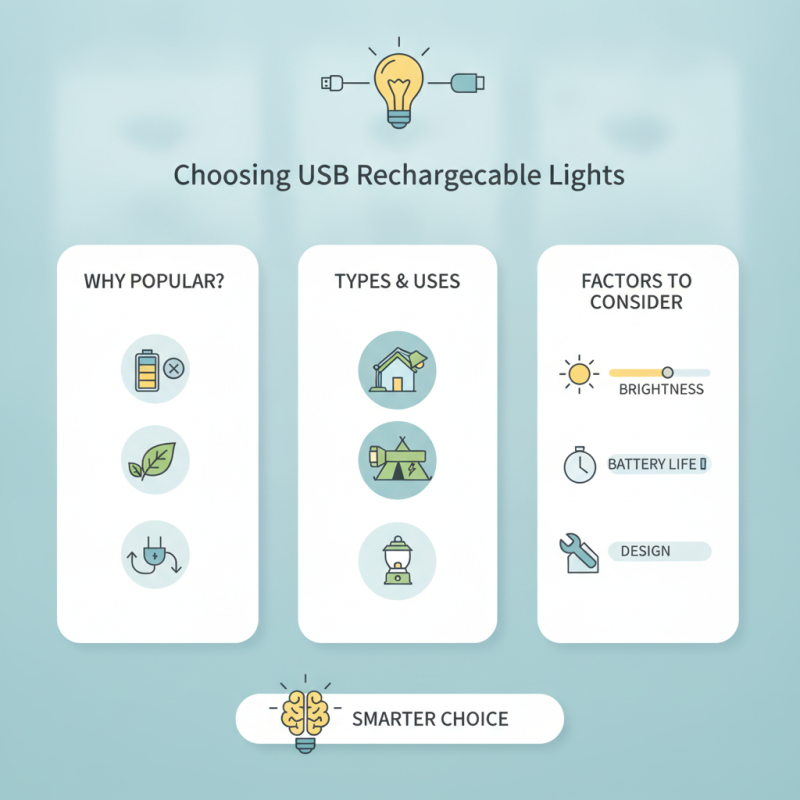
In recent years, USB rechargeable lights have become increasingly popular among consumers. Why are USB rechargeable lights gaining popularity in the market? The answer lies in their convenience and efficiency. These lights often eliminate the need for batteries, making them eco-friendly options. Many users appreciate not needing to purchase new batteries regularly. Instead, they can simply plug in and recharge.
USB rechargeable lights come in various styles and sizes. Whether for home use, camping, or emergency situations, options exist for every need. Many models are portable, lightweight, and easy to store. However, not all lights perform equally. Some may charge quickly but lack brightness, while others may offer great illumination but take longer to power up.
Users often express frustration with the myriad choices available. With so many products, discerning which one suits specific requirements can be daunting. Consumers must consider factors like brightness, battery life, and design. Reflecting on these aspects will lead to smarter decisions suited to individual needs. Ultimately, understanding the landscape of USB rechargeable lights can enhance the user experience significantly.
Understanding the Advantages of USB Rechargeable Lights
USB rechargeable lights offer numerous advantages that can enhance your daily life. These lights are convenient and environmentally friendly, reducing the need for single-use batteries. With built-in rechargeable batteries, users can easily power their devices via a USB port. Whether you charge them from a computer, power bank, or wall adapter, the versatility is impressive.
Moreover, they often come with energy-efficient LED technology. This means they provide bright illumination while consuming less power. Many models feature adjustable brightness settings. This allows users to customize the light’s intensity based on their needs. From reading at night to outdoor activities, the flexibility is valuable.
However, not all USB rechargeable lights are created equal. Some may have a limited lifespan, which can be frustrating. Users should consider their intended use before making a choice. It’s essential to evaluate battery capacity and charging time. This ensures the light operates when needed. It’s a balance between functionality and longevity that often requires careful consideration.
Advantages of USB Rechargeable Lights
Types of USB Rechargeable Lights for Various Applications
When selecting USB rechargeable lights, it's essential to consider the various types available for different uses. According to a recent industry report, portable LED lights are ideal for outdoor activities, offering brightness with energy efficiency. These lights are lightweight and can provide illumination for up to 10 hours on a single charge, catering to camping and emergency situations.
For indoor use, task lighting options are available. Clip-on or desk lamps powered by USB are gaining traction. They provide adjustable brightness, making them suitable for reading or working. The flexibility of these lights often lacks thorough user guidelines, which can lead to inefficiencies. Some users report underestimating their power needs, resulting in frequent recharges.
Smart lighting solutions are emerging as well. These lights can be controlled via mobile apps. While this technology offers convenience, users sometimes find the connection process confusing. Compatibility issues may also arise, causing frustration. Thus, it’s crucial for consumers to assess their specific needs before making a selection. Investing in the right type of USB rechargeable light can greatly enhance usability and satisfaction in various settings.
Key Features to Consider When Selecting USB Rechargeable Lights
When choosing USB rechargeable lights, several key features should influence your decision. The brightness level is essential for practical usage. Different activities demand varying brightness levels. For instance, a high-lumen setting is ideal for outdoor tasks, while a softer glow suits cozy indoor environments.
Battery capacity is another critical factor. A light with a higher mAh rating typically lasts longer between charges. However, consider your typical usage patterns. If you often forget to recharge, select a model with extended battery life. It's worth noting that some lights offer quick-charge options, providing convenience for regular users.
Tips: Always check the material of the light. A durable and weather-resistant design ensures longevity. Consider ergonomic features, such as handheld comfort and weight. These aspects contribute to a better user experience. Before purchasing, read user reviews. They often highlight practical strengths and weaknesses that specifications may not cover. This feedback can refine your choices, helping you avoid poor purchases.
Lastly, think about the light's size and portability.
Compact lights are easier to transport but may compromise on battery or brightness. Be honest about your needs. Sometimes, larger lights might be better for your specific activities, despite their bulkiness. Each feature you prioritize should align with your personal requirements.
Assessing Battery Life and Charging Times for Your Needs
When choosing USB rechargeable lights, evaluating battery life and charging times is key. Reliable lights offer a balance between longevity and quick charging. Lights that take too long to recharge can be a hassle. You want something that is convenient, especially if you frequently use them.
Tips: Look for lights that give you at least six hours of battery life on a single charge. Most users prefer faster charging times of two to four hours. It’s essential to check how long the specific light lasts before it requires a recharge.
Charging efficiency varies among models. Some lights boast rapid USB-C charging, while others might rely on standard USB. If you forget to charge them, that could become a problem. Consider the capacity of the battery as it often correlates with performance. Higher mAh ratings indicate longer use but might take longer to charge completely. Balancing these factors can help you find the right light for your needs.
Comparing Price Points and Brand Reputation of USB Rechargeable Lights
When choosing USB rechargeable lights, price points and brand reputation are crucial factors. Brands vary in reliability, and costs can differ significantly.
Lower-priced options may lack durability and performance. Investing in reputable brands often leads to better quality and longer life. A higher price tag does not always guarantee superior performance, though.
Tips: Research product reviews and user experiences. Look for common issues mentioned by multiple users. Pay attention to the warranty provided. A solid warranty indicates the brand's confidence in their product.
Consider checking online forums for real user feedback. Some lights may advertise high lumens but don't deliver in real-world use. Be wary of overly positive reviews, as they can be biased.
Trustworthy opinions come from diverse sources. This way, you get a more rounded perspective of what to expect.
FAQS
: They are convenient and environmentally friendly, reducing single-use batteries. Built-in batteries allow easy charging via USB ports.
Consider factors like battery capacity, charging time, and intended use. Evaluate how long the light lasts and its performance.
Aim for at least six hours of use on a single charge. Quick charging times of two to four hours are preferable.
Different models charge at varying speeds. Forgetting to charge may lead to inconvenience. Choose one that suits your usage needs.
Lower prices may indicate lower durability. Investing in reputable options often results in better quality and lifespan.
Not necessarily. Some reviews can be biased. Look for common issues across various user experiences for a balanced view.
High lumens may not guarantee real-world performance. It's wise to verify through real-user feedback before purchasing.
It can be problematic, especially for frequent use. Always check battery life and charging protocols to avoid issues.
They allow customization based on your needs, whether for reading or outdoor activities. Flexibility makes them more useful.
Some lights have a limited lifespan, which can frustrate users. It's important to weigh functionality against longevity.
Conclusion
USB rechargeable lights are becoming increasingly popular in the market due to their convenience and eco-friendliness. Understanding their advantages is essential for making an informed choice. There are various types of USB rechargeable lights designed for different applications, ranging from outdoor activities to emergency situations. When selecting a light, it's crucial to consider key features such as brightness levels, durability, and portability.
Additionally, assessing battery life and charging times helps ensure the lights meet your specific needs. Price points and brand reputations also play a critical role in the decision-making process, allowing consumers to find value without compromising on quality. Ultimately, as technology advances and the demand for sustainable energy solutions grows, the question remains: why are USB rechargeable lights gaining popularity in the market? The answer lies in their efficiency, cost-effectiveness, and the growing awareness of environmental concerns.

 Glow Flashlight