Portable lights are easy to overlook once the job is done. A rechargeable lantern may sit damp in a garage, while a work light gets buried beneath tools. Months later, corroded contacts, cracked lenses, or a battery that will not hold charge can turn a dependable light into a frustrating surprise. Good storage takes only a few minutes, but the right steps depend on the light’s battery type, materials, and manufacturer instructions.
What are the best ways to store portable lights when not in use? Lighting-care specialist Alex Morgan offers a simple rule: “Clean the light, protect its battery, and keep it somewhere cool and dry.” This practical advice points to the details that matter: wipe away dust and moisture, inspect cables and seals, and avoid leaving batteries fully drained for long periods. For rechargeable models, check the manual for the recommended storage charge; battery guidance can vary. Remove disposable batteries from lights stored for extended periods, especially if they may leak.
A shelf in a dry cupboard is usually better than a cold, humid shed. Keep lenses away from loose screws and sharp tools, and coil charging cables without tight bends. Small habits help. Still, storage advice is not universal: a sealed outdoor lantern and a compact inspection light may need different care. The sections ahead explain how to prepare, pack, and periodically check portable lights, while noting where manufacturer instructions should take priority. One missed detail can matter. A quick inspection before storage can reveal a loose cap or damaged seal before moisture gets inside.
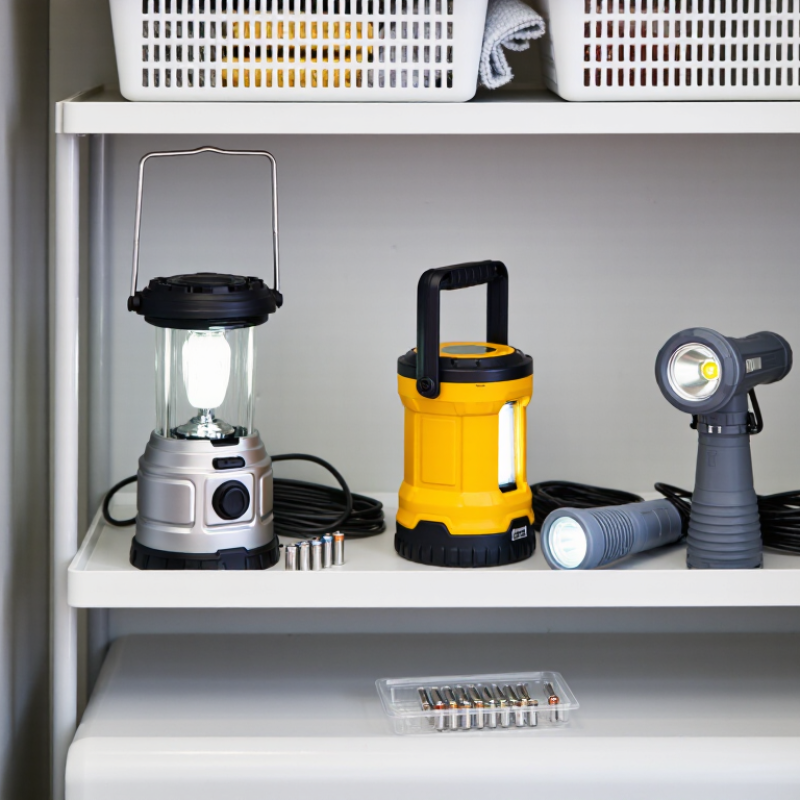
Before storing a portable light, identify how it gets power and where its vulnerable parts are. A battery lantern may need different care from a headlamp or solar light. Check the product instructions, especially for rechargeable models; battery designs vary. This small step matters.
For a lantern or work light, wipe dust from the handle, vents, and lens with a dry or slightly damp cloth, then let it dry fully. Coil its cable loosely, and keep the lens from rubbing against tools in a drawer. A headlamp’s elastic strap can stretch if left tightly wrapped, so store it relaxed. Keep it simple. Solar lights need a clean, uncovered panel and a dry place away from prolonged heat.
Battery care depends on the type. If a light uses removable cells and will sit unused for months, take them out to reduce the risk of leakage. Store cells separately in a cool, dry place, and never mix old and new ones. For rechargeable lights, follow the maker’s charging guidance; some batteries tolerate long storage better when partly charged. Avoid leaving any light in a hot car or a damp shed. These details are easy to overlook, and storage advice is not identical for every model.
| Portable Light Type | Before Storage | Recommended Storage Conditions | Battery Guidance | Key Precautions |
|---|---|---|---|---|
| LED flashlight or headlamp | Switch it off, wipe away moisture and dirt, and check the housing and lens for damage. | Keep in a cool, dry place, preferably in a case or drawer away from direct sunlight. | For extended storage, remove replaceable batteries to reduce the risk of leakage. Store loose batteries so their terminals cannot contact metal. | Do not store while wet. Follow the light and battery manufacturers’ instructions for battery type and storage. |
| Rechargeable handheld work light | Turn it off, disconnect the charging cable, and clean and dry the light before putting it away. | Store in a dry, ventilated location within the temperature range specified in the product manual. | For long-term storage, use the charge level recommended by the manufacturer. Check and recharge periodically if the manual advises it. | Avoid leaving the light continuously connected to a charger unless the manufacturer permits it. Do not store a damaged or swollen battery. |
| Camping lantern | Switch off the lantern, clean the diffuser, and make sure the body and battery compartment are dry. | Keep it upright or in its protective case in a cool, dry storage area. | Remove disposable batteries for prolonged storage. For rechargeable models, follow the manual’s charging and storage guidance. | Do not place heavy objects on the diffuser or hang the lantern by a part not designed to support its weight. |
| Solar-powered portable light | Clean and dry the solar panel and light. Check seals and cables for visible damage. | Store indoors in a dry place away from excessive heat, frost, and prolonged direct sunlight when not in use. | If the model has a rechargeable battery, follow its manual for charge level and periodic maintenance during storage. | Do not assume a solar panel alone keeps the battery charged while stored indoors. Avoid covering a wet panel or light. |
| Battery-powered string or decorative lights | Switch off and remove batteries if they are replaceable. Coil the cable loosely without sharp bends. | Place in a dry container or pouch, keeping bulbs and connectors protected from crushing and tangling. | Store removed batteries separately with terminals protected from contact with conductive objects. | Inspect wires and insulation before reuse. Do not store lights with damaged cables or exposed conductors. |
| Rechargeable emergency light | Test the light, switch it off, and store it where it can be reached easily during an outage. | Choose a cool, dry, accessible location and keep the manual or charging information nearby. | Check the charge at the intervals recommended by the manufacturer, since rechargeable batteries can lose charge while stored. | Do not block ventilation openings or store near heat sources. Follow the product’s instructions for test and maintenance intervals. |
General note: Product-specific instructions take priority. Keep portable lights and batteries away from excessive heat, moisture, and children; recycle batteries through an appropriate collection program.
Switch it off, unplug the charging cable, and remove batteries if the manual allows. Wipe away dust and let the casing dry fully.
Look for swelling, corrosion, dampness, or damaged insulation. Set aside any compromised battery. Do not put it back into the light.
Around half charge is a practical target, unless the product manual says otherwise. Avoid leaving a battery fully charged or nearly empty for months.
Choose a cool, dry indoor shelf, such as a bedroom closet or utility cupboard. Keep it away from sunlight, heaters, radiators, and damp areas.
Heat can speed battery aging, while moisture may corrode contacts or damage charging ports. A sunny windowsill is a poor choice.
Keep cells separate from the light and away from loose metal objects that could touch their terminals. A small labeled container can help.
Keep them dry and loosely coiled, away from sharp tools. Check connectors for dampness before packing them away.
Check them every few months. Look for damage, unusual odors, or battery charge loss. It is easy to forget, so a storage-date label helps.
The best storage method depends on the type of portable light, since different designs and power sources may have specific care requirements. Before putting a light away, switch it off, remove dirt, and make sure it is completely dry. Check the manufacturer’s guidance for batteries: some should be removed for long-term storage, while rechargeable lights may need to be stored with an appropriate charge. Keep charging cables and other accessories together, but avoid placing them where they can become tangled, damp, or damaged.
What are the best ways to store portable lights when not in use? Choose a cool, dry location away from direct sunlight, excessive heat, and moisture. Pack each light securely to protect it from dust, impact, and pressure, and avoid stacking heavy items on top. Periodically inspect stored lights, batteries, and accessories for signs of damage or corrosion, and recharge or maintain them according to their instructions so they are ready when needed.

 Glow Flashlight